
Short answer: buy for the diary, not for the demo. A treatment room fills through the interaction between services at different price points and different frequencies, and a machine chosen without thinking about where it sits in that rhythm tends to become the impressive one nobody books twice. This is how to design a menu where each device has a role, and what each technology's natural rebooking pattern actually looks like.
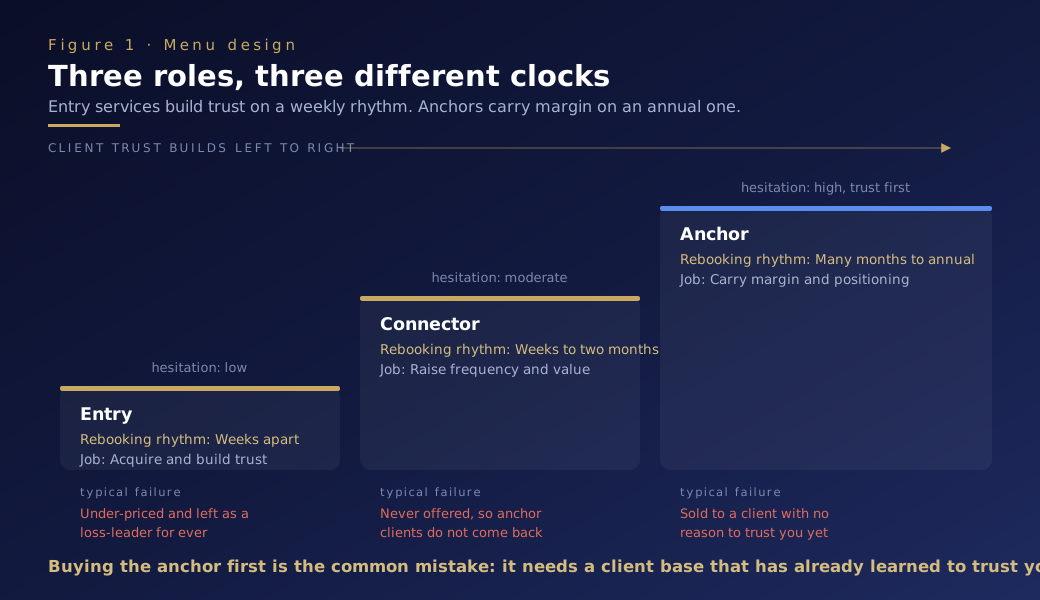
Three Roles, Three Different Jobs
Entry services
Approachable price, minimal hesitation, repeatable at short intervals. Their commercial job is not the revenue from the appointment — it is converting a first-time visitor into someone who trusts you with a larger decision. Facials, hydro dermabrasion and basic skin-quality work sit here.
Anchor services
Higher ticket, longer interval, the treatment your positioning is built on. Structural lifting and resurfacing work belong here: fewer clients, larger transactions, and the reason a client chooses you over the salon down the road.
Connector services
Modalities that combine with both — preparing skin for an anchor treatment, extending or maintaining a result, or adding a comfort stage to a protocol. Microneedling, RF for skin quality and infusion work often function this way. Under-priced relative to their effect on the rest of the menu.
| Entry | Connector | Anchor | |
|---|---|---|---|
| Client hesitation | Low | Low to moderate | High — needs trust first |
| Natural interval | Weeks | Weeks to a couple of months | Many months to annual |
| Commercial job | Acquire and build trust | Raise frequency and transaction value | Carry margin and positioning |
| Typical failure | Under-priced, treated as a loss-leader forever | Not offered, so anchor clients never return between visits | Sold to a client who has no reason to trust you yet |
What Each Technology's Rebooking Rhythm Looks Like
Interval is a property of the physics, not a marketing choice. Understanding it prevents the most common menu error: buying a once-a-year treatment and expecting it to fill a diary.
- RF for skin quality. A course of sessions at short intervals, then periodic maintenance. Naturally generates repeat bookings, which is why it functions well as both entry and connector.
- HIFU for structural lifting. A single treatment with a long interval while collagen remodels, followed by maintenance at a considerable distance. High ticket, low frequency — an anchor, not a volume service.
- Hydro dermabrasion and facials. Short interval, low hesitation. The most reliable diary-filler on the floor and the cheapest way to keep a client in contact — and if you are weighing a branded system against a generic one, this comparison covers what the trademark actually changes.
- Laser hair removal. A defined multi-session course governed by growth cycles, then long-term maintenance. Predictable series revenue with a clear beginning and end.
- Body contouring and muscle stimulation. Course-based, with strong seasonal demand patterns. Requires a booking structure that anticipates the peak rather than reacting to it.
The comparison between the two tightening technologies in particular is worth reading properly — HIFU versus RF covers depth, comfort and which one a new practice should buy first.
Why Combination Beats Collection
A menu of five unrelated single treatments is five separate marketing problems. A menu of three protocols that share stages is one.
Combination works because the technologies act at different levels and do not compete for the same tissue response. A practical sequence: prepare and cleanse, address the surface or dermis, then the deeper structural layer, then finish with cooling. Each stage improves the next, and the client experiences a protocol rather than a list.
Two honest cautions. Energy-based treatments on the same area in the same session need a real protocol and trained assessment — cumulative thermal load is the thing to respect, not a formality. And some combinations are clinically sensible but commercially weak, because they consume therapist time that the anchor treatment alone would have covered. Model the room minutes before you design the bundle.
Where a single platform covers several of these stages, the sequencing problem simplifies considerably — CPT TIME PRINCESS and SYNCHROLIFT HIFU-RF ELITE were built for clinics that want one footprint and one training curve rather than four machines doing what one protocol needs.
Designing the Ladder
Work the menu from the bottom up, because that is how clients arrive:
- One obvious way in. A service a first-time client can choose without research or anxiety. If your entry offer requires explanation, it is not an entry offer.
- A reason to return before the result fades. The connector stage. This is where most clinics have a gap — an anchor treatment sold once, with nothing offered at month three.
- A visible next step up. The client who has had six facials is the person who should be told about structural lifting. The conversation only works if you have earned it.
- A rebooking habit built into the protocol. Book the next appointment before the client leaves. Interval is a clinical fact you already know; leaving it to the client to decide is a self-inflicted empty diary.
Staffing Is the Constraint Nobody Budgets
Every service on the menu competes for the same therapist hours, and a machine that requires your most experienced operator is effectively capped at that person's availability. Two consequences worth designing around:
- Prefer platforms with clear parameter logic, real-time skin response feedback and genuine safety cut-offs, so a second therapist can deliver what the first one promised. This is a procurement criterion, not a training afterthought — it is weighted in our scorecard for exactly this reason.
- Count room minutes per revenue unit. A ninety-minute anchor treatment that fills a room and consumes your senior clinician may be less valuable than a thirty-minute connector service run by anyone.
Intimate and women's health services deserve a separate mention: the entry point is discretion and a properly briefed team rather than price, and the equipment considerations are different. Our intimate care range covers that category.
Where to Start If You Have Nothing Yet
One versatile platform, one clearly named entry service, and enough consumable and training budget left to actually run it. That is the honest version of the advice, and it is why how you split the budget matters more than which machine you choose within it.
Tell us the clients you already have and the room you already run, and we will suggest a menu shape rather than a product — start here, or browse the catalogue with the three roles in mind.
Frequently Asked Questions
Which aesthetic machine brings the most repeat clients?
The ones with short natural intervals. RF for skin quality runs as a course of sessions at short spacing plus periodic maintenance, and hydro dermabrasion and facials are the most reliable diary fillers because hesitation is low and the interval is weeks. Structural lifting with HIFU is the opposite shape — a single treatment with a long interval while collagen remodels — which makes it an anchor service, not a volume service.
How many treatments should a med spa offer at launch?
Fewer than most clinics want. A menu of five unrelated single treatments is five separate marketing problems; three protocols that share stages is one. Design the ladder from the bottom up: one obvious way in that needs no research, a connector stage that gives a reason to return before the result fades, a visible next step up, and the next appointment booked before the client leaves.
Can HIFU and RF be combined in the same session?
They act at different depths, which is what makes the pairing work as a protocol rather than a duplication. But energy-based treatments on the same area in one session need a real protocol and trained assessment — cumulative thermal load is not a formality. Some combinations are clinically sensible and commercially weak, because they consume therapist minutes the anchor treatment alone would have covered, so model the room time before you design the bundle.
What is the most common equipment mistake in menu planning?
Buying a once-a-year treatment and expecting it to fill a diary, then buying another machine to fix the gap. Interval is a property of the physics, not a marketing choice. The related constraint nobody budgets is staffing: a machine whose result depends entirely on your most experienced operator is capped at that person's availability, which is why parameter logic, real-time feedback and genuine safety cut-offs are procurement criteria rather than nice-to-haves.