Every KOLIFU device is assembled, calibrated and tested under one roof in Qingyuan, Guangdong. This is a walk-through of the site where 8,000+ m² of production floor, an in-house mold workshop and a 72-hour burn-in bench turn components into clinic-ready equipment.
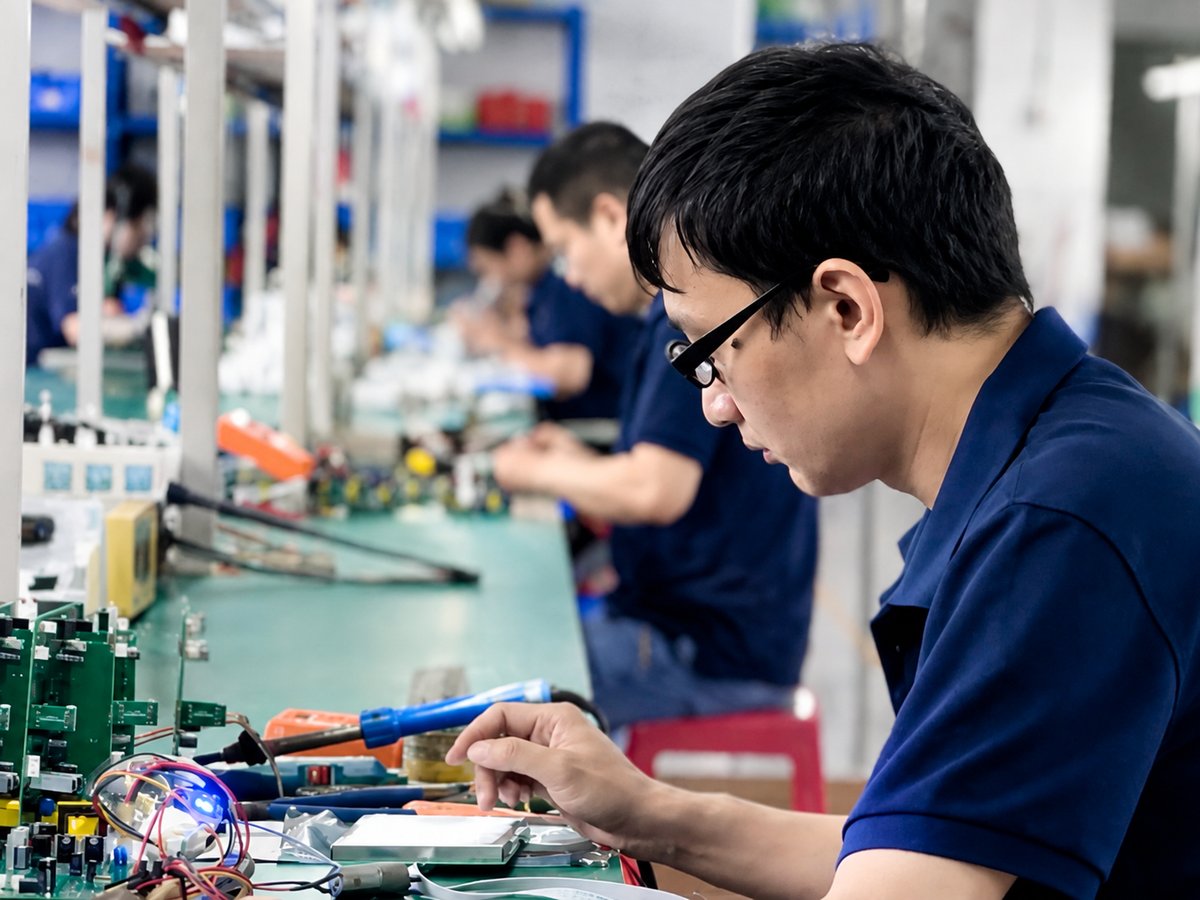
Line testing and calibration bay — every unit is exercised here before it can advance to final inspection.
KOLIFU has manufactured professional aesthetic equipment since 2011, and our beauty equipment factory sits in Qingyuan, Guangdong — roughly an hour north of Guangzhou. The manufacturing facility holds the entire chain under one roof: incoming material inspection, core unit assembly, handpiece and cartridge benches, a calibration bay, a QC lab, and an export packing line.
Nothing critical is subcontracted. That distinction matters more than it sounds: it is why we can tell you exactly what happens to your order, and why you are able to come and watch it happen. If your purchasing team runs supplier audits on beauty equipment manufacturers, the facts below are the ones they will want to verify — so we have written them down rather than leaving them to a sales call.
| Manufacturing site | 72B Building, HongRunGu Industry, QingYuan, GuangDong, China |
|---|---|
| Established | 2011 — manufacturing professional aesthetic equipment since then |
| Floor area | 8,000+ square metres, production and R&D on one site |
| In-house processes | Mold making, injection molding, core unit assembly, handpiece assembly, cartridge assembly, calibration, QC, packing |
| Engineering | 20+ engineers across hardware, software and industrial design |
| Pre-shipment test | 72-hour continuous run, safety inspection and performance calibration on every unit |
| Certification | CE marking and RoHS compliance; certificates of conformity and test reports held on site |
| Shipping partners | DHL, FedEx and UPS, with full tracking on every consignment |
| Working languages | English and Chinese across sales, engineering and support |
Six benches, six sets of gates. Each stage has a defined pass or fail before a device is allowed to move forward — which is also the order you would see them in if you walked the line with us.
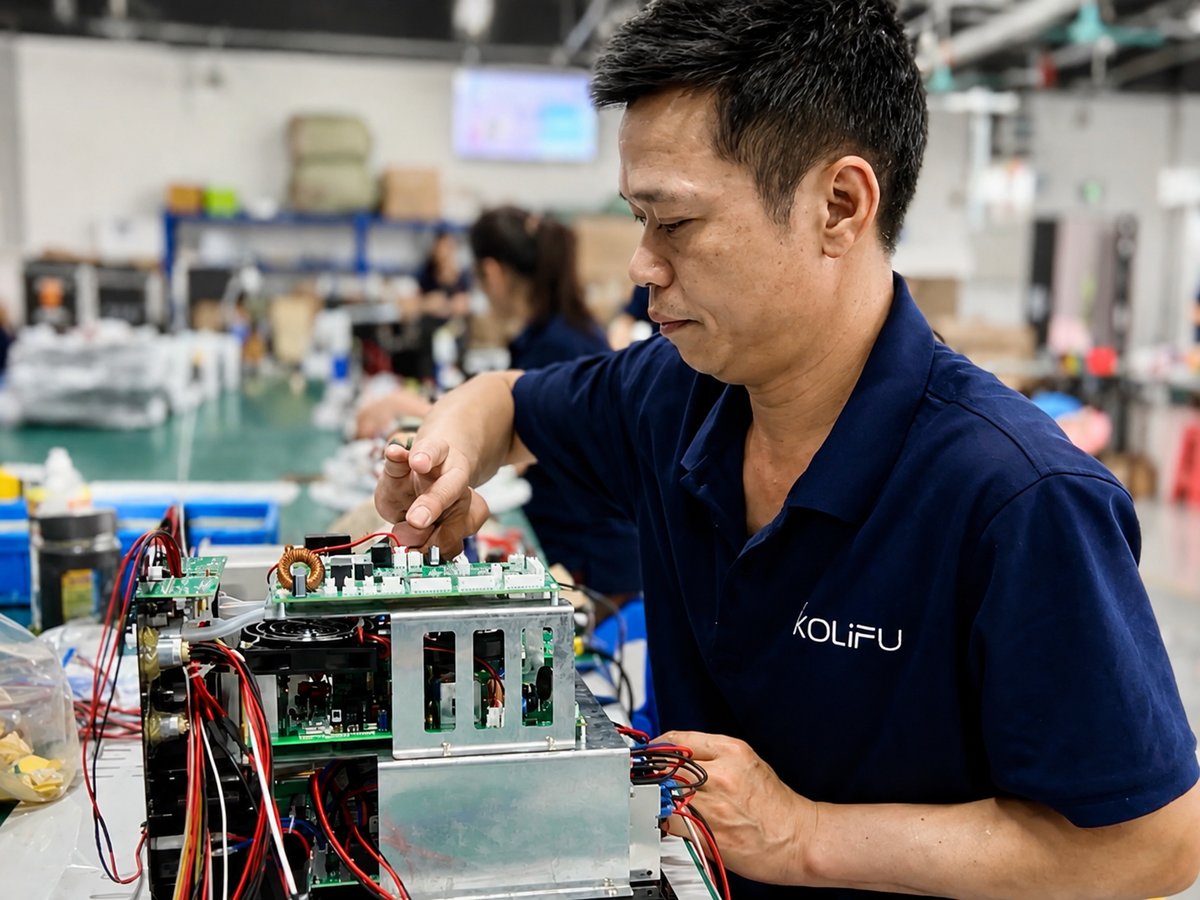
Base units are built here: power supply, control board, display and housing come together in one frame. Each station works to a written build sheet, so unit one and unit one thousand are assembled the same way.
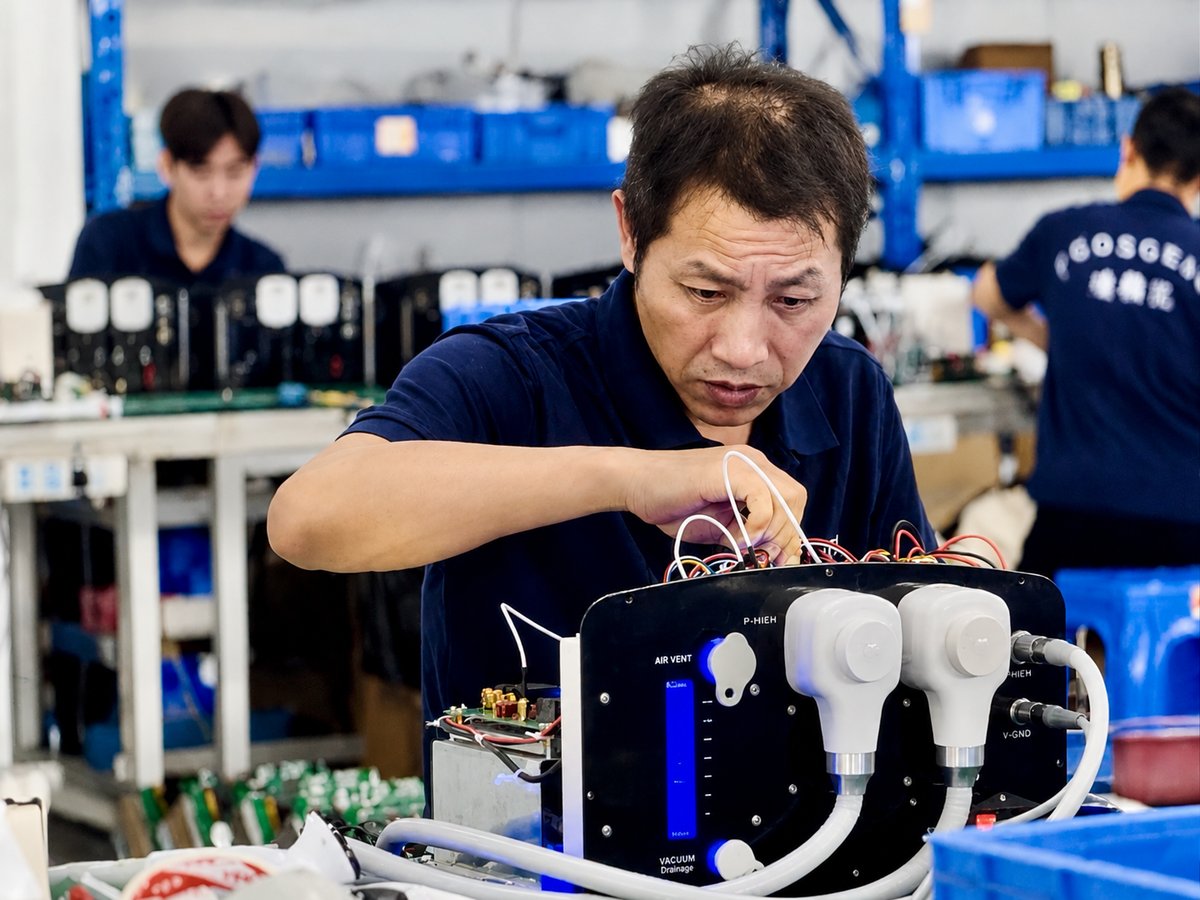
The handpiece is the part that touches your clients, so it gets its own bench. Handpieces are assembled by hand and calibrated so the energy actually delivered matches the figure on the label.
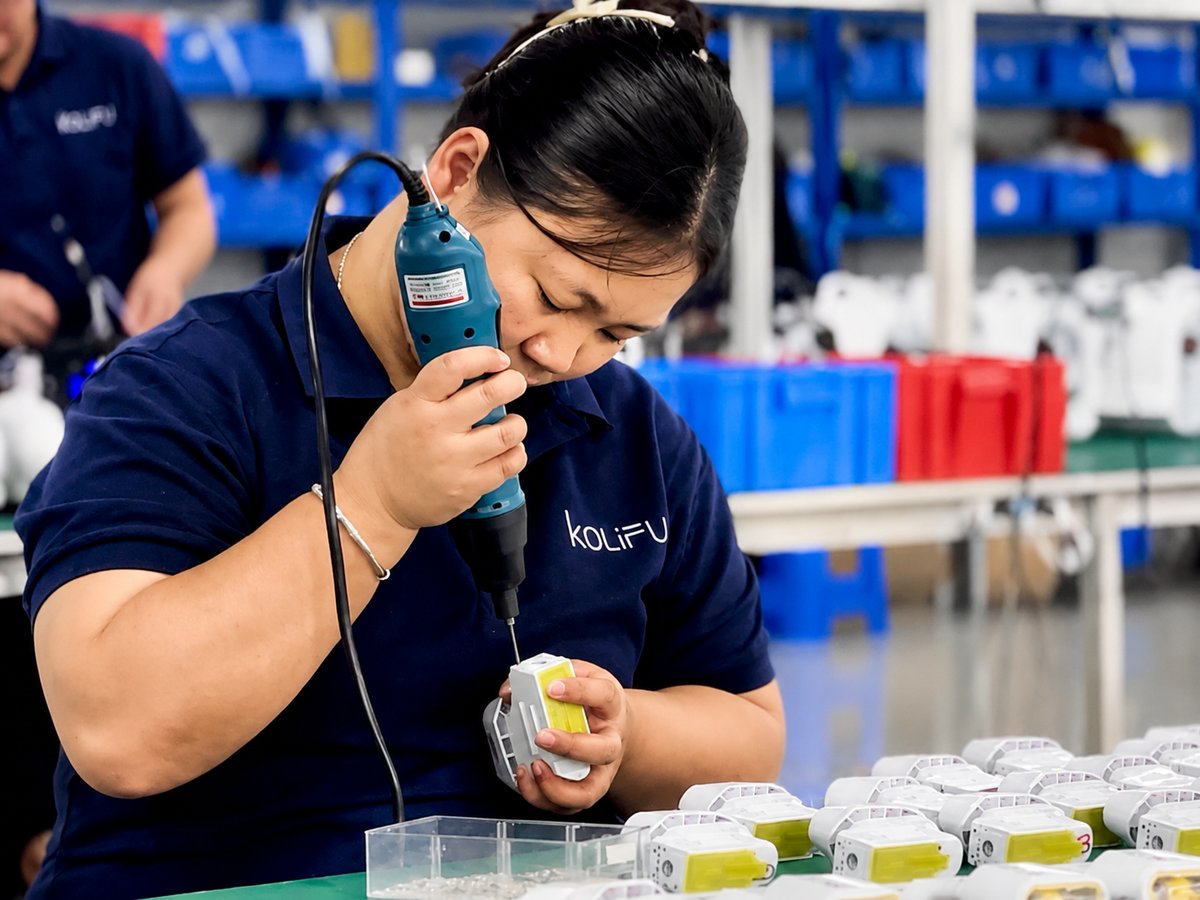
Cartridges are consumables, which means they decide your running cost. They are assembled by hand and each one is tested individually for correct energy delivery before it is sealed and packed.
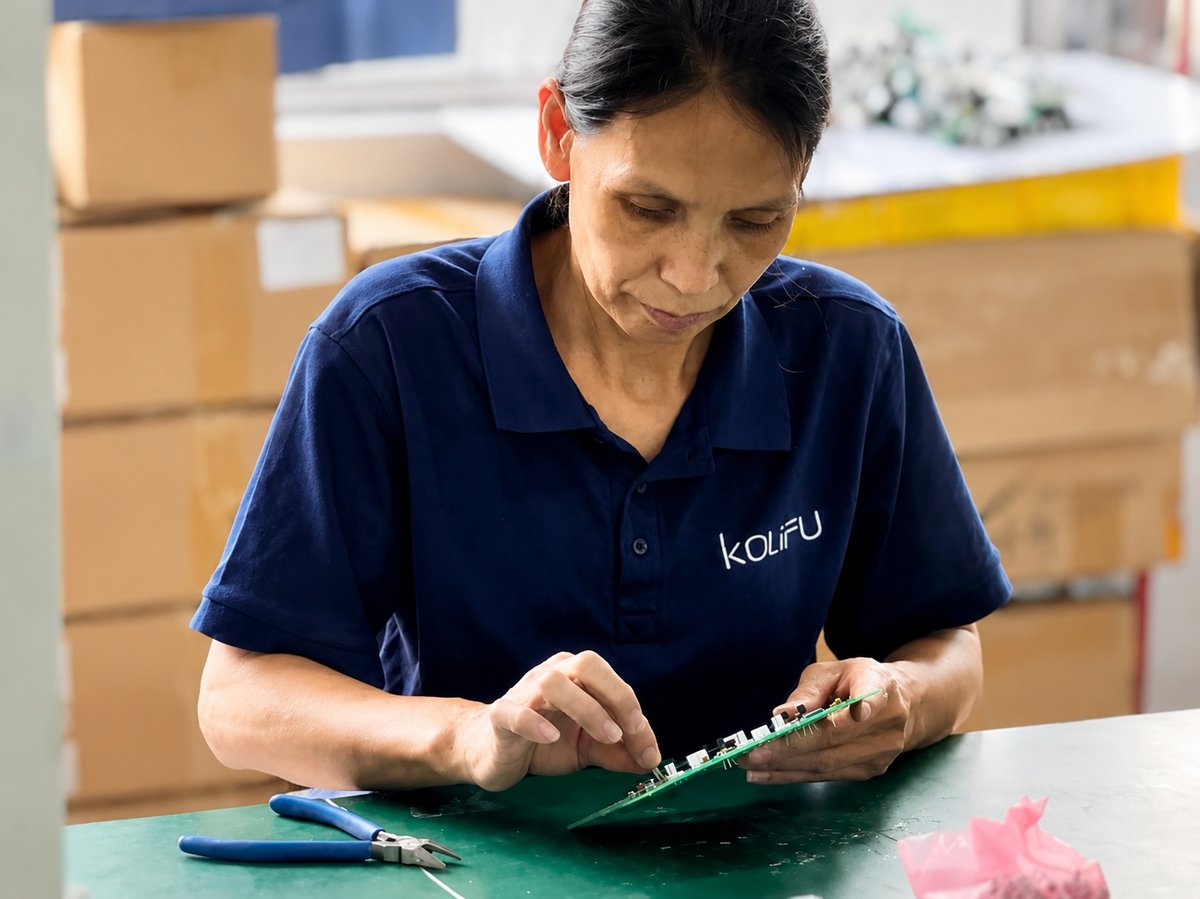
Nothing enters the line unverified. Circuit boards, cartridges, motors, cables and housings are inspected against specification on arrival, and non-conforming batches are rejected at the door instead of being discovered at final test.
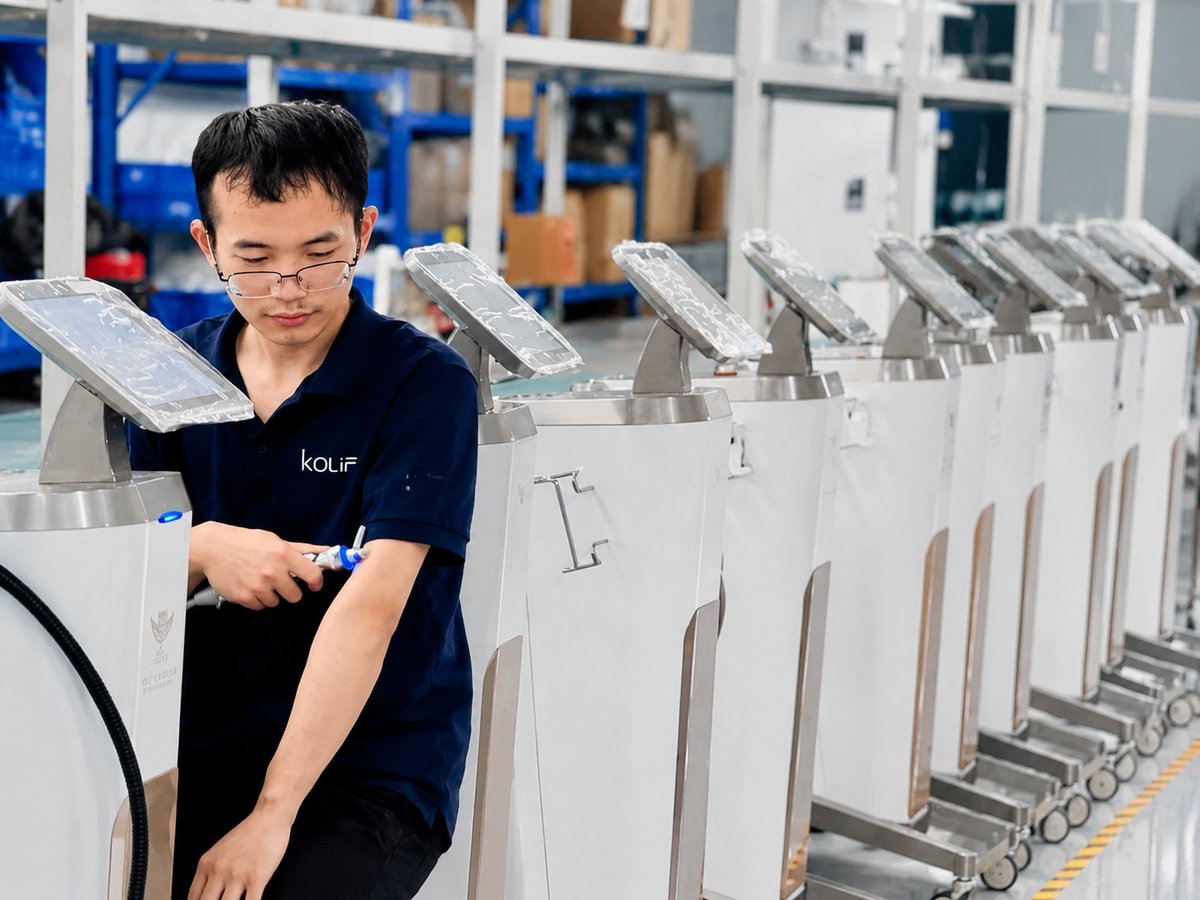
Before a device is cleared for packing it runs a continuous test cycle, then a safety check, then a cosmetic inspection of the shell, screen and connectors. Anything that fails goes back to the bench, not into a carton.
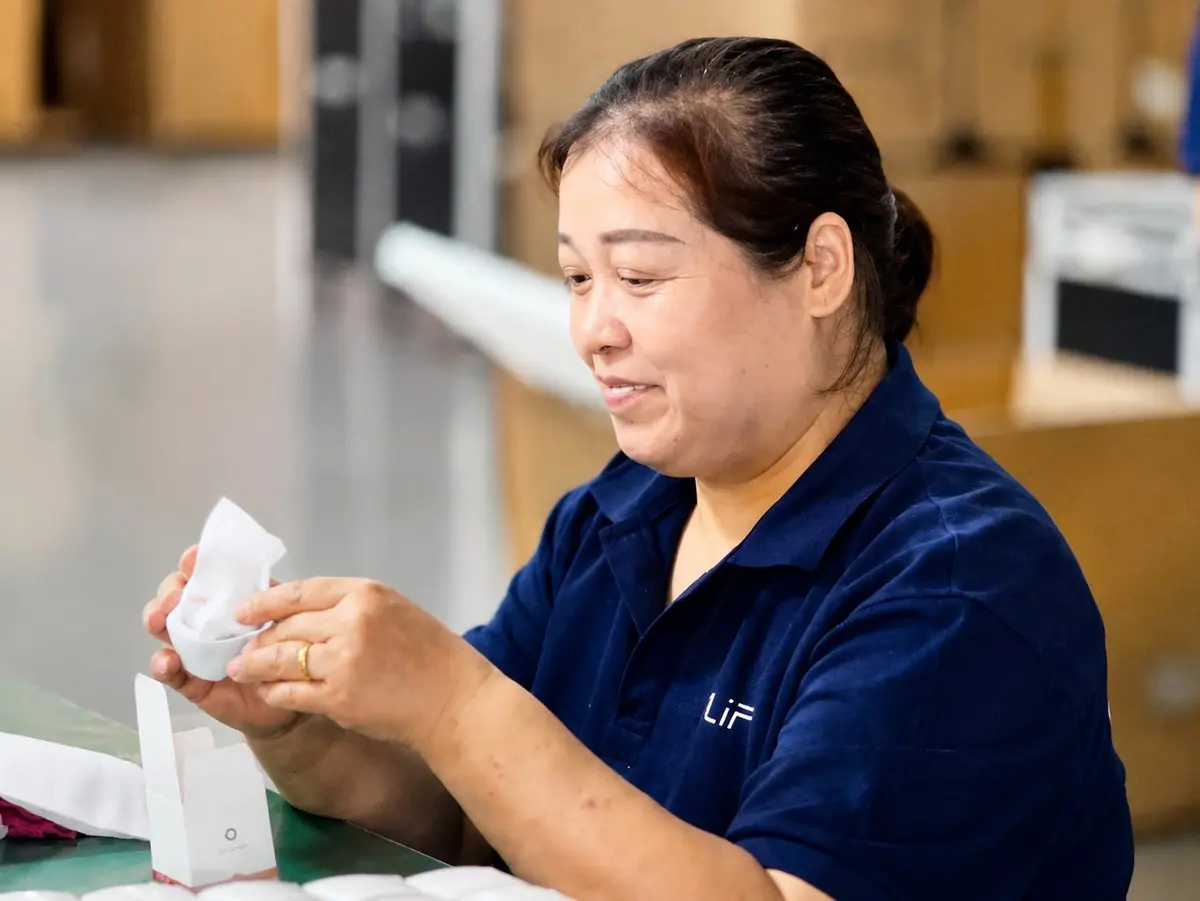
Finished units are foam-blocked into flight cases with accessories and documentation, then crated for export. Cartons carry matched model and serial records, so a unit issued today can still be traced years from now.
Quality claims are easy to write and hard to check. These are the three things your team can ask us to demonstrate, either on a video call or in person.
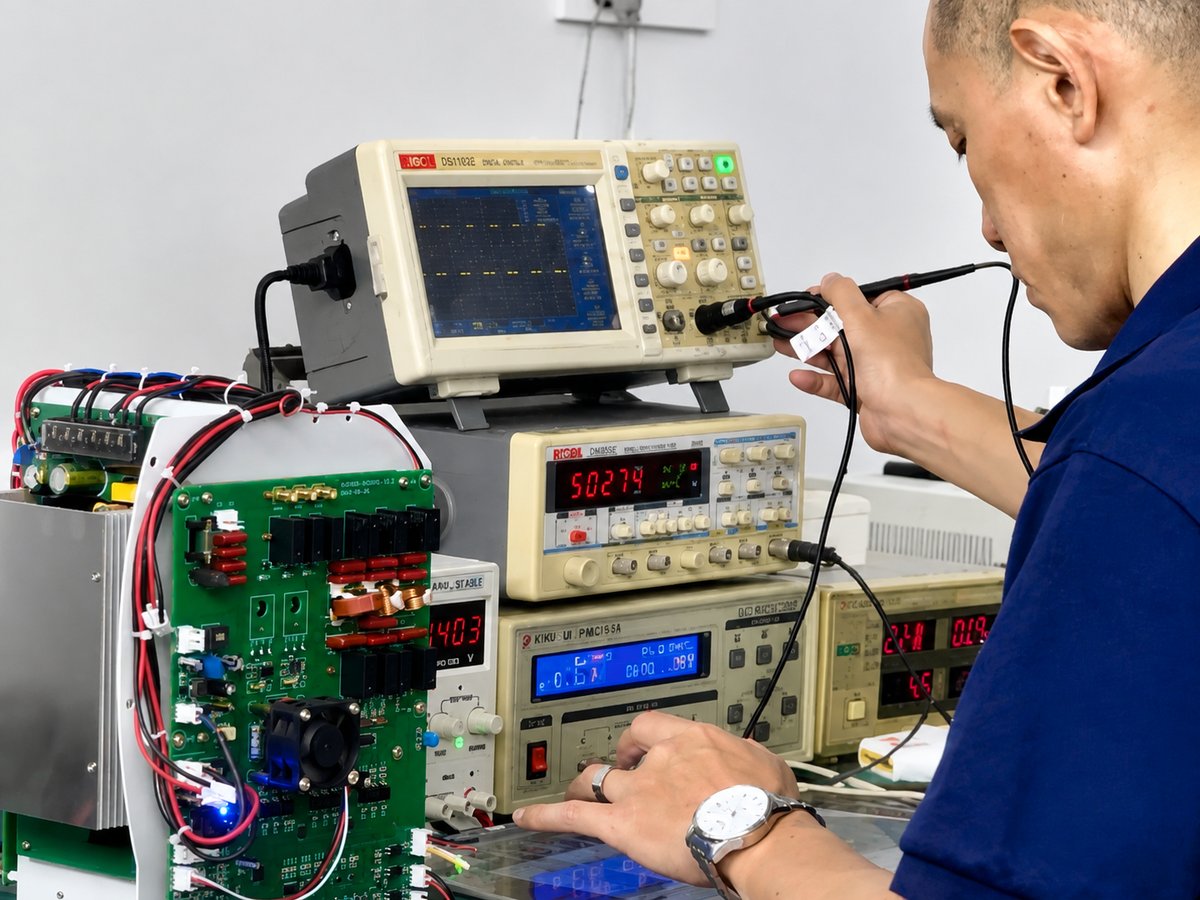
Output waveform and stability are measured on an oscilloscope rather than judged by eye. It is a slower way to test and a much better one.
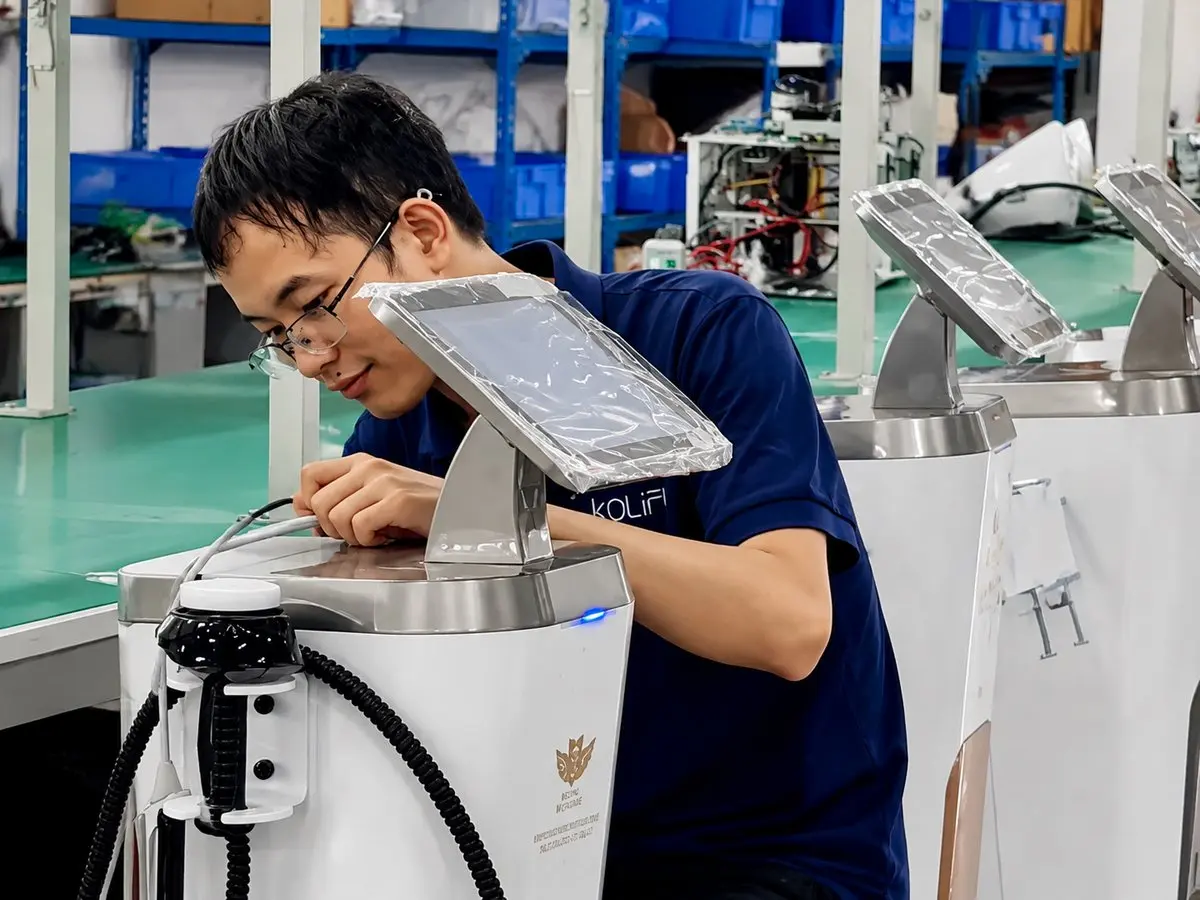
Every finished device completes a 72-hour continuous run, a safety inspection and a performance calibration. Only then is it signed off for packing.
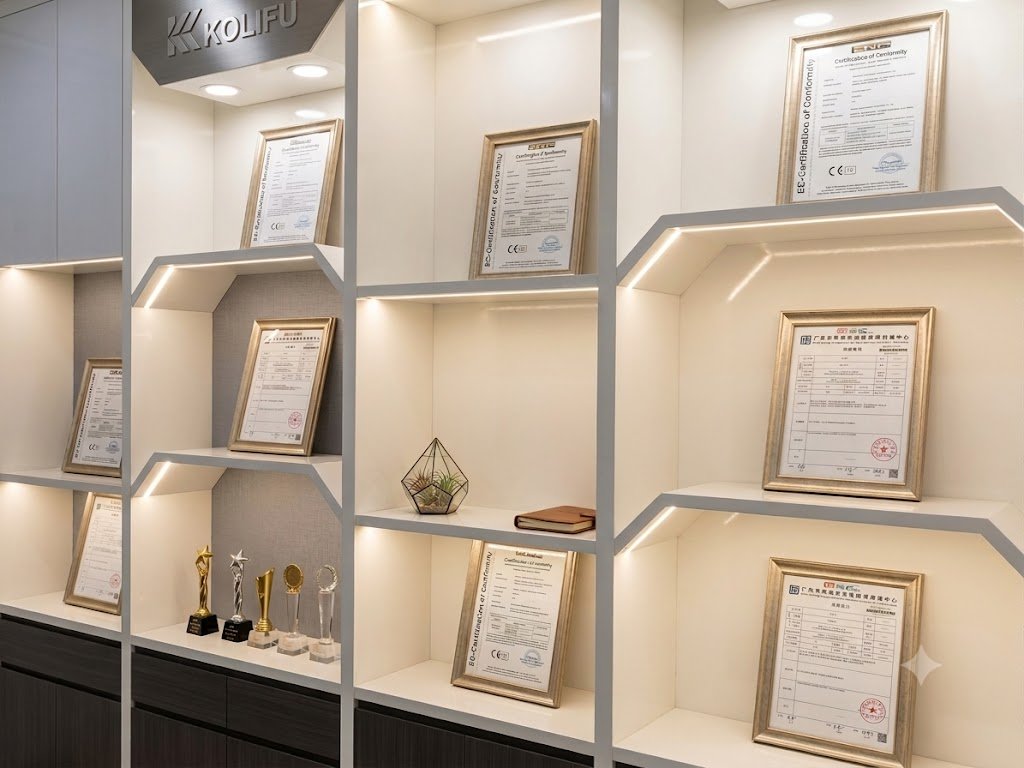
Certificates of conformity, product test reports and quality documentation are held on site. Ask and we will send the set that applies to your market to your purchasing or regulatory contact.
Custom work is where most beauty equipment manufacturers quietly hand you off to a third-party factory. We keep it in the building. KOLIFU owns its mold workshop and injection molding equipment, which is what makes a genuinely new shell, handpiece or housing practical instead of theoretical.
Customization runs from a simple logo change through colorways and software interfaces, all the way to a new product design with tooling built for your brand. Because the tooling stays on our floor, your artwork and your molds are not sitting in someone else's workshop.
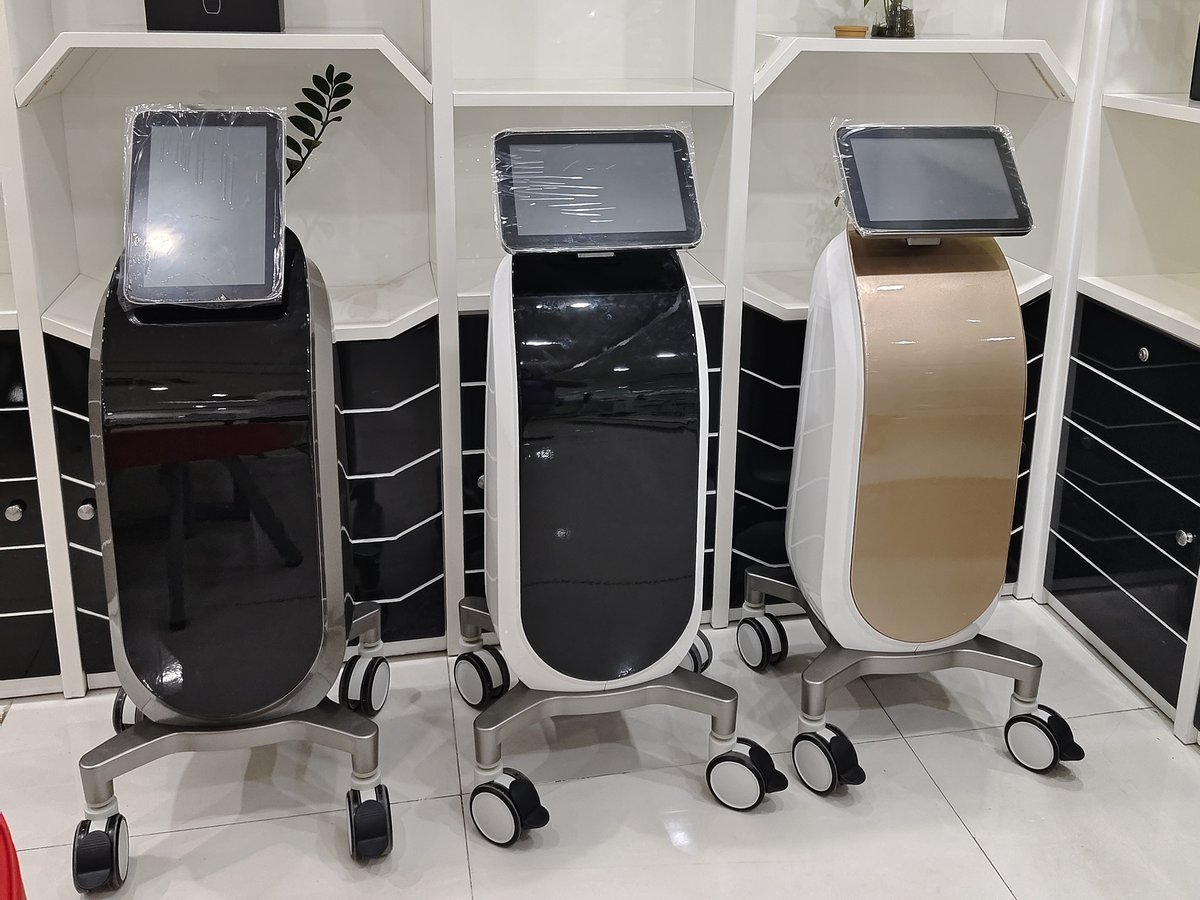
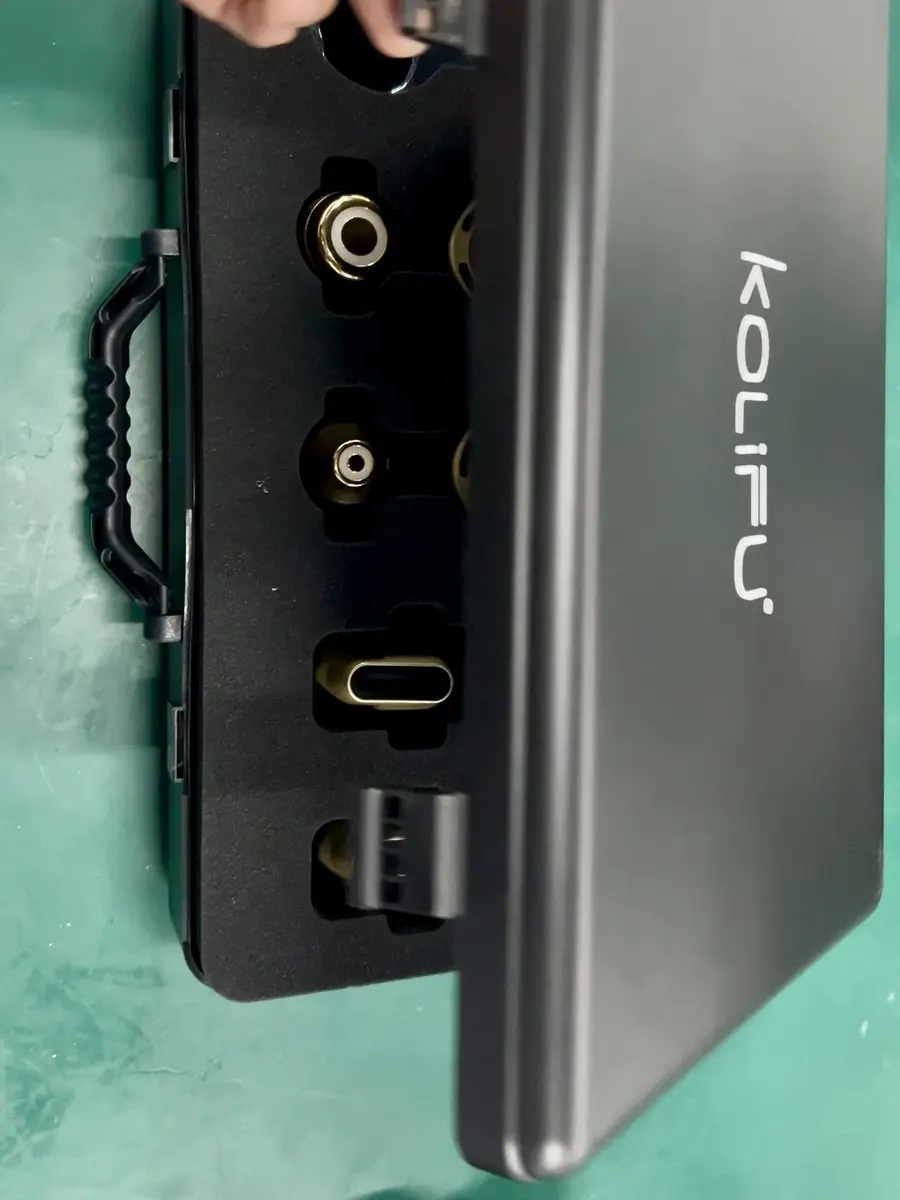
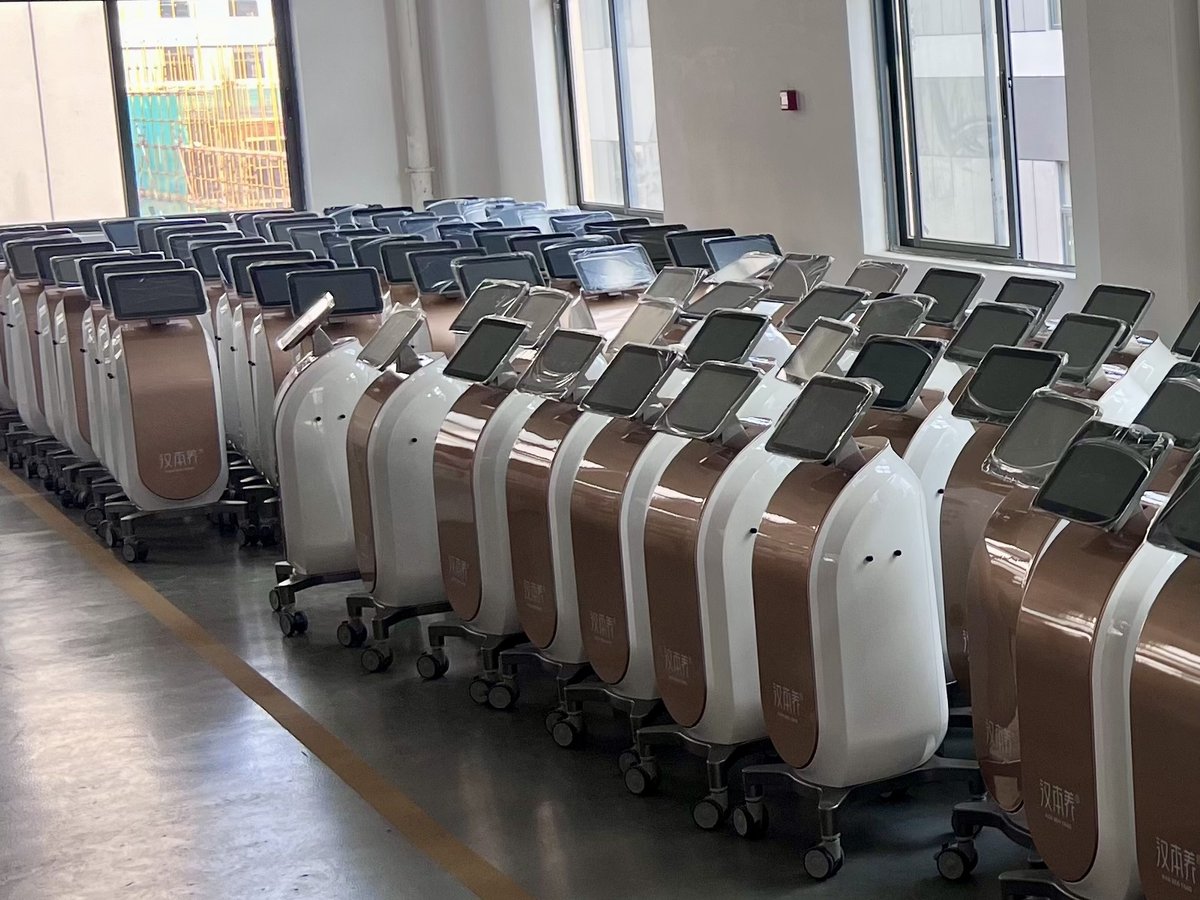
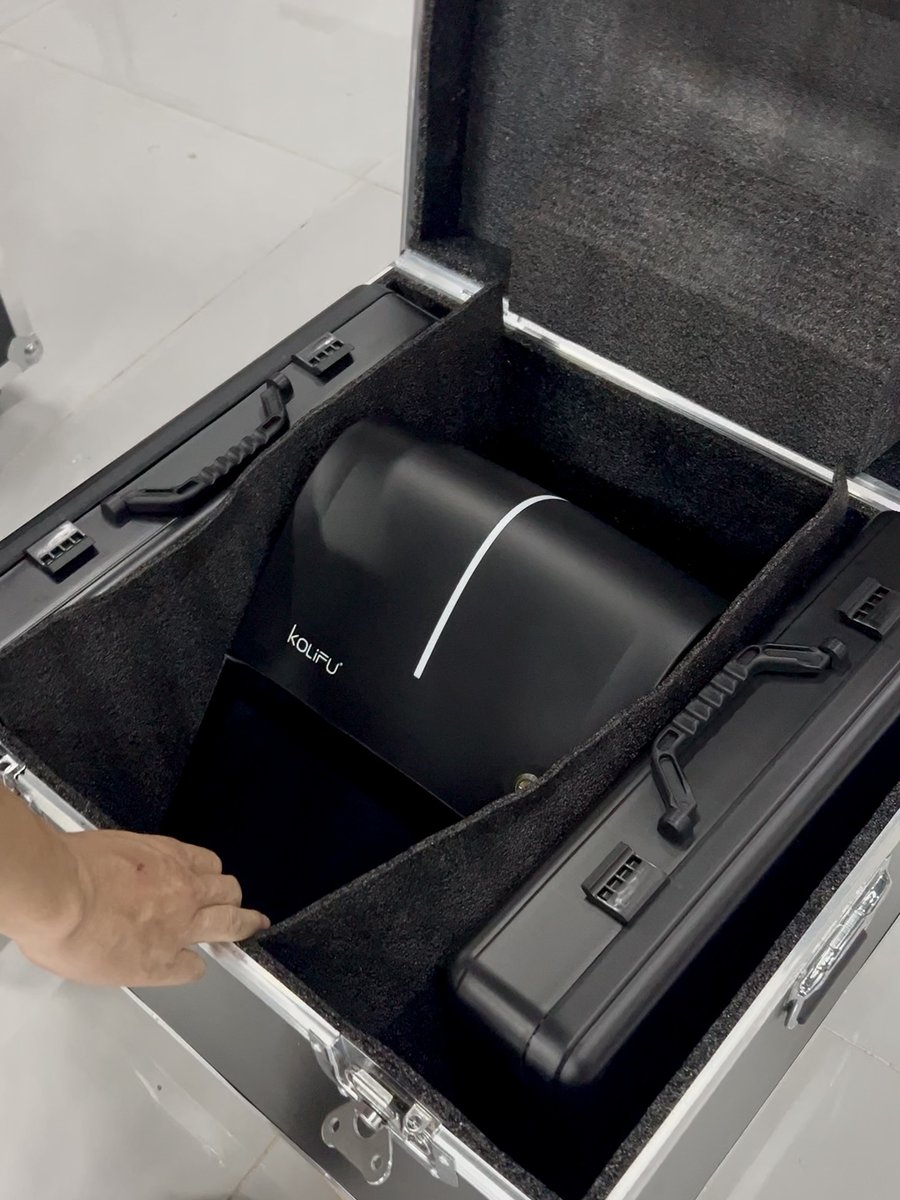
Finished goods are held in our own warehouse rather than a shared logistics park, so stock can be inspected, re-tested and re-packed without leaving the site. That matters when an order is scheduled to ship against a clinic opening date.
Equipment leaves in purpose-built flight cases with foam blocking and matched accessory sets, then moves by DHL, FedEx or UPS with full tracking. Aesthetic devices are heavy, delicate and expensive to replace in transit — the packing layer is not the place to save money.
More than 20 engineers cover hardware, software and industrial design on site. The same team writes the treatment protocols, parameter tables and user manuals that ship in the box — which is why support questions get answered by someone who knows the circuit board, not a script.
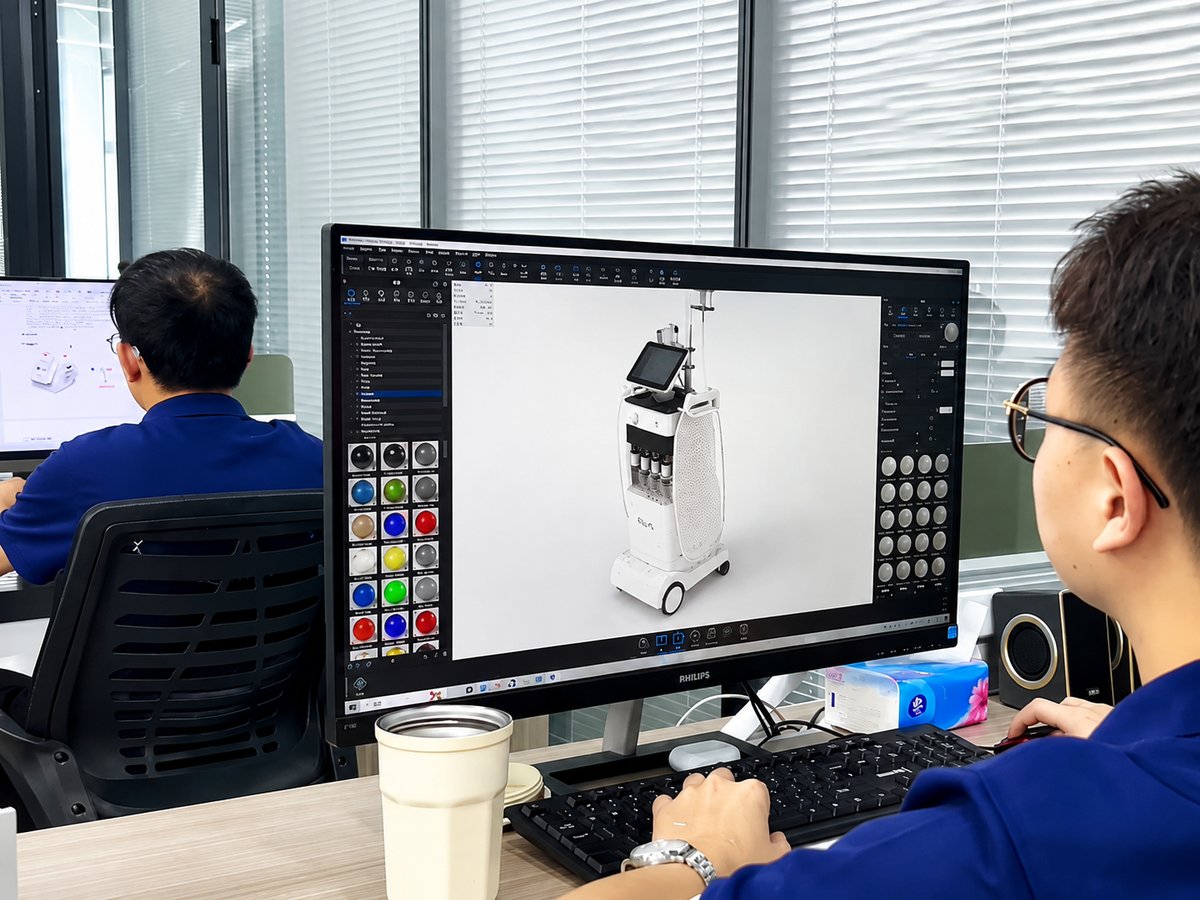
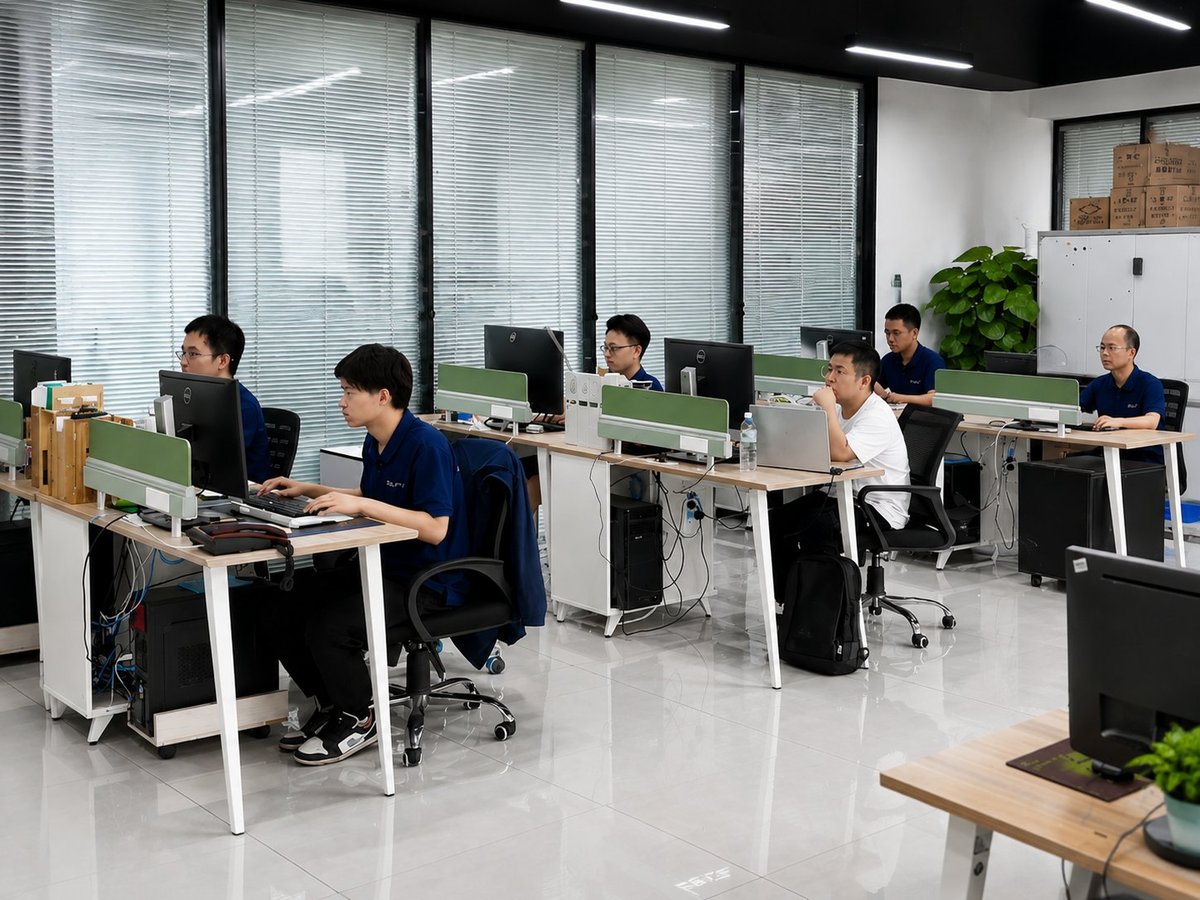
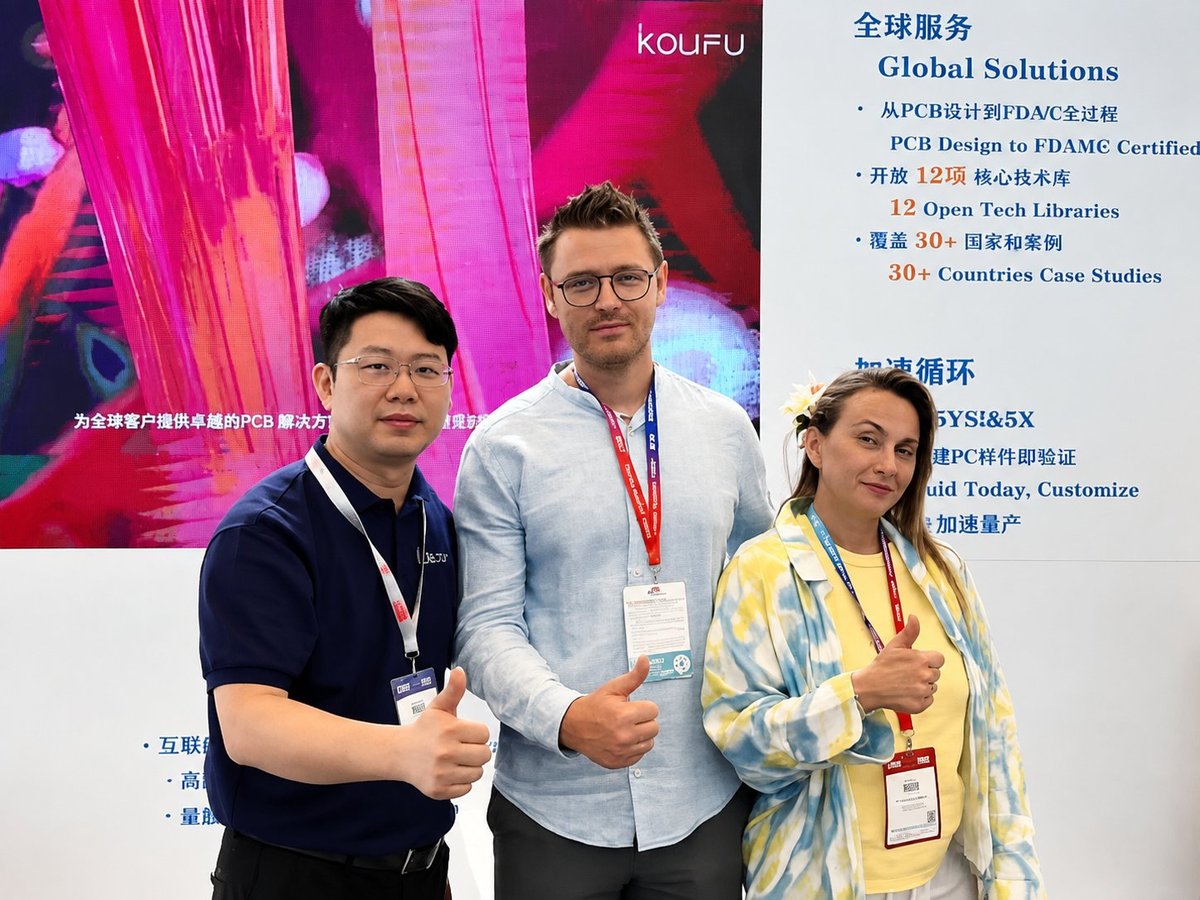
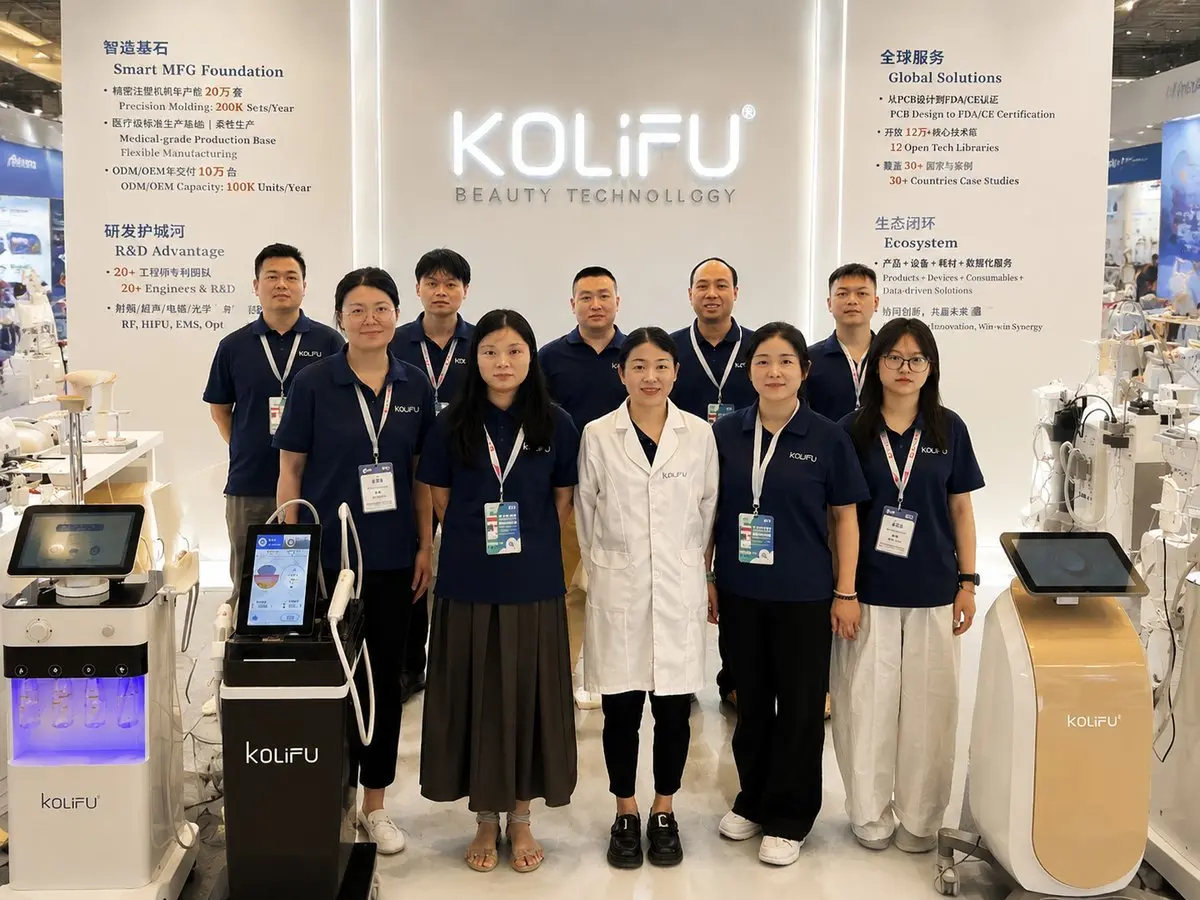
Your first point of contact is a sales engineer rather than a call centre, and the same person stays with your account through delivery and after. Distributors and clinic groups we work with tend to say the same thing: the reason they reorder is that when something goes wrong, they reach a person who can actually fix it.
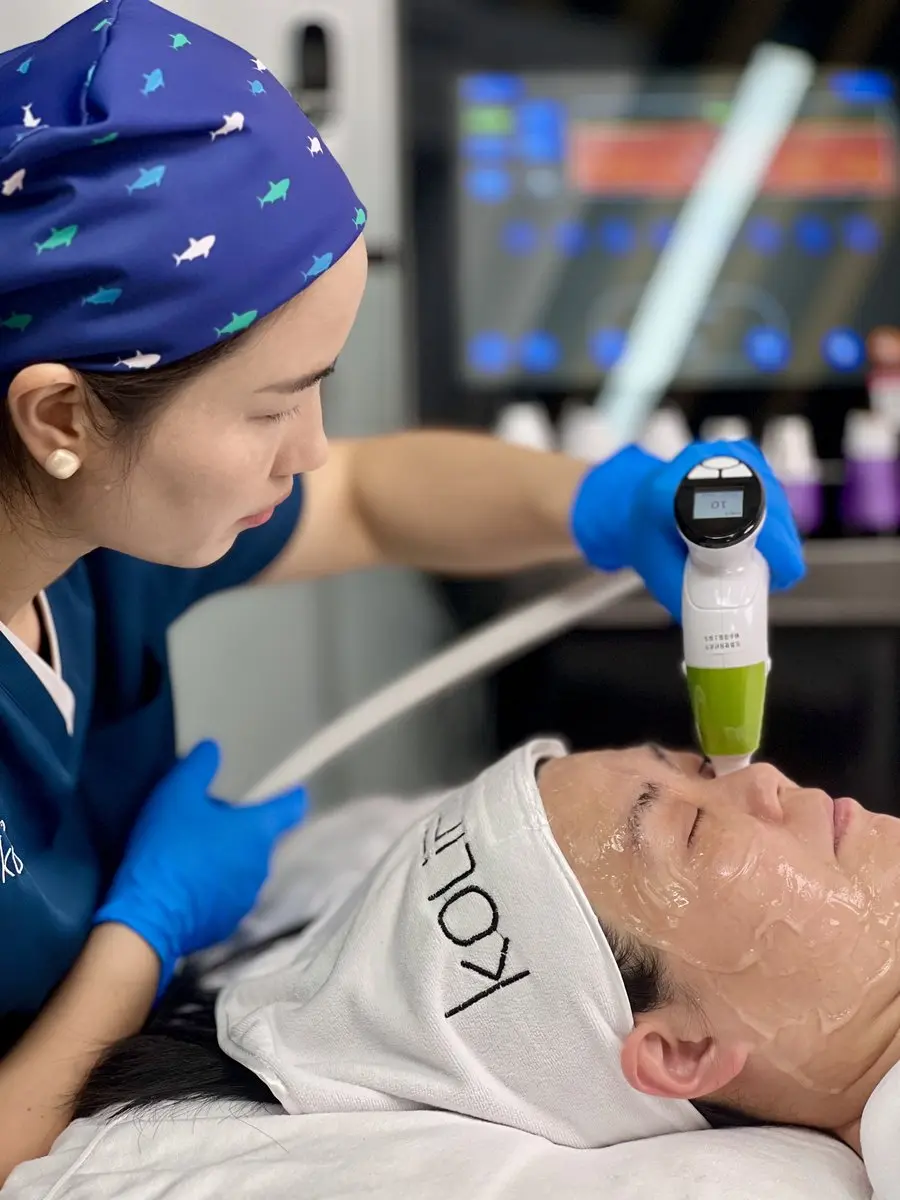
The factory includes a working showroom where every current model is set up and running. Handpieces can be handled, cartridge depths compared and treatment settings demonstrated on the spot — either in person or over a live video call if travel is not practical.
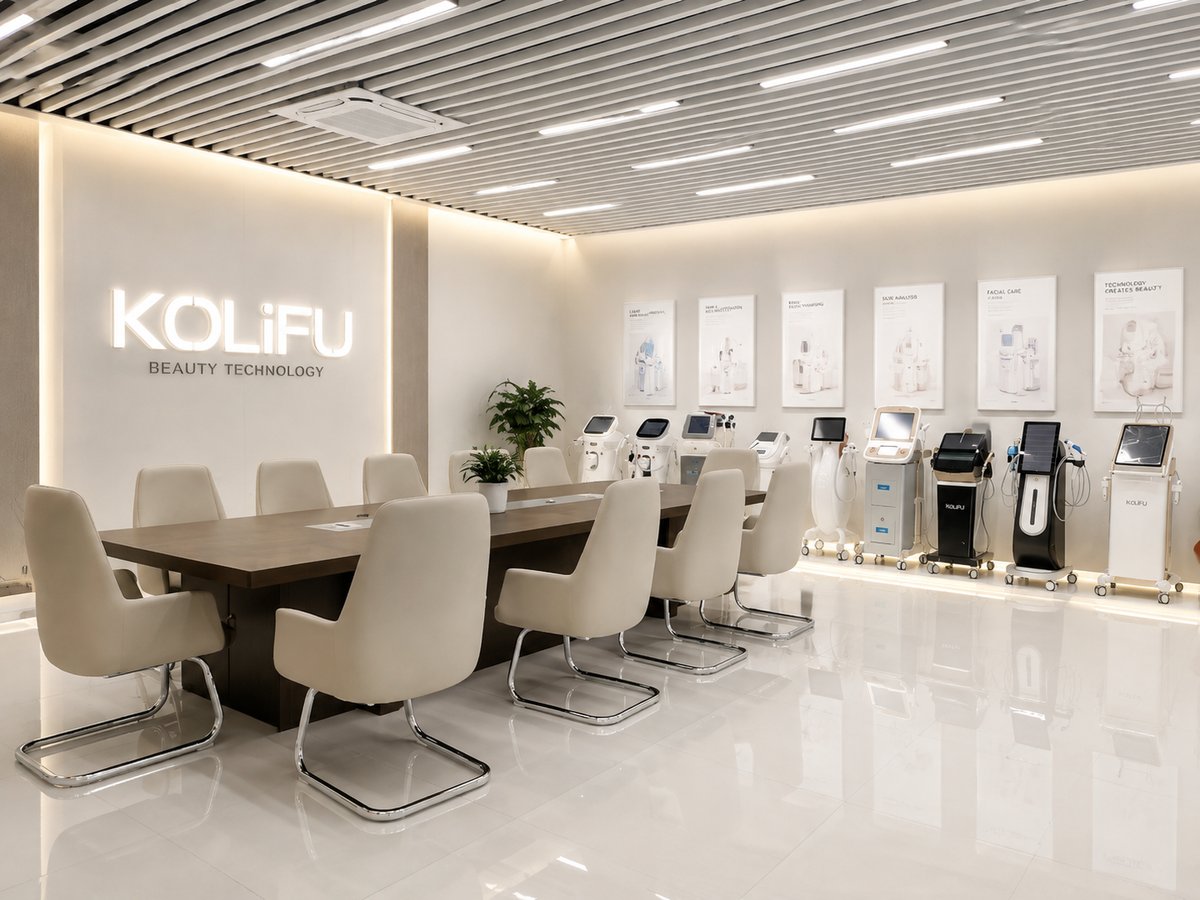
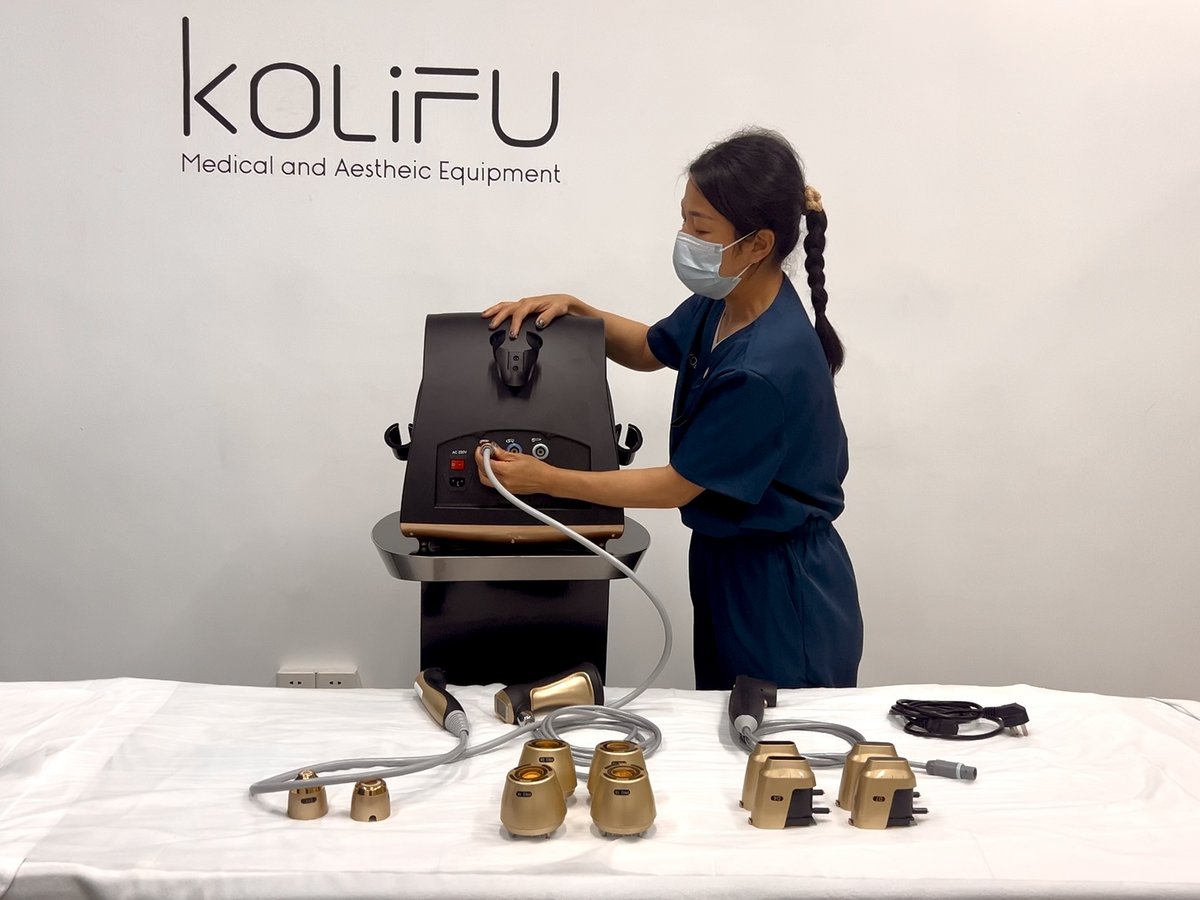
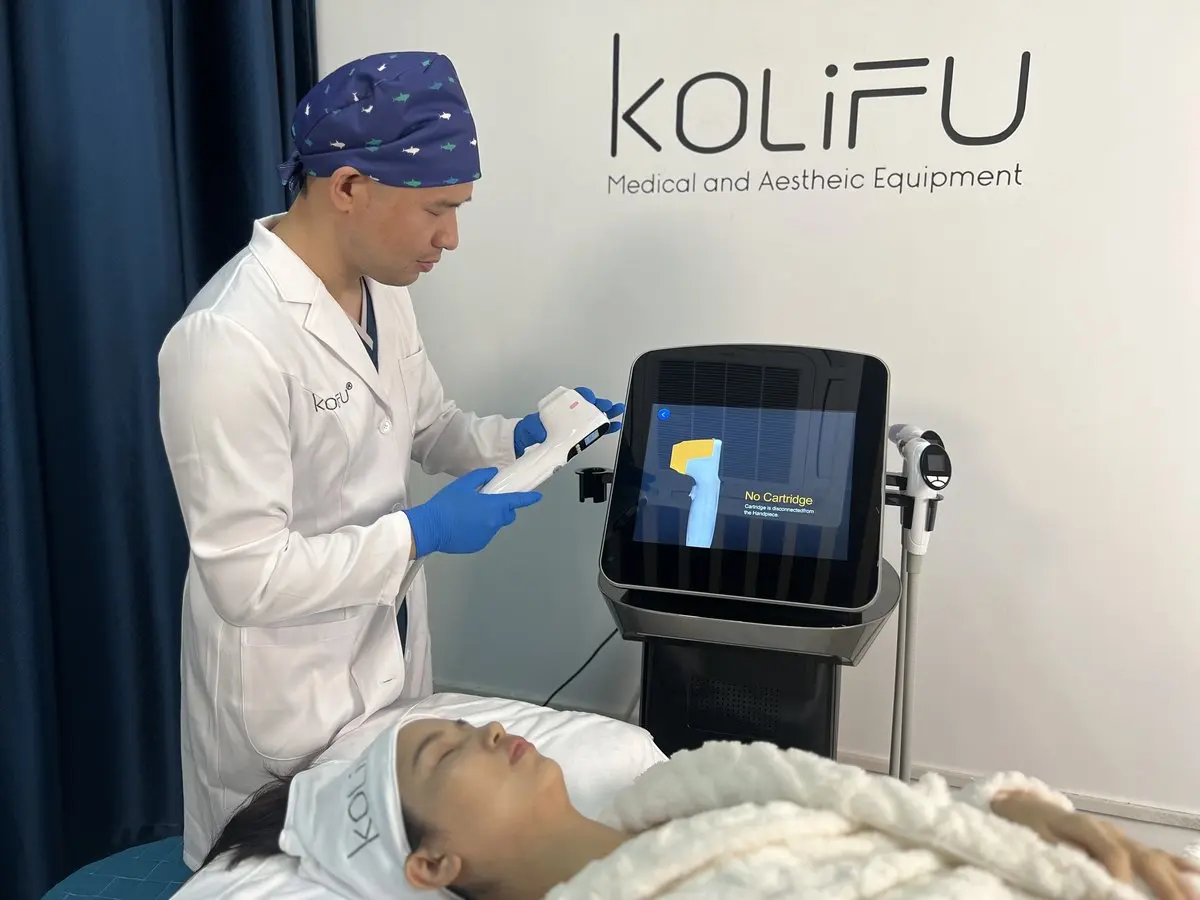
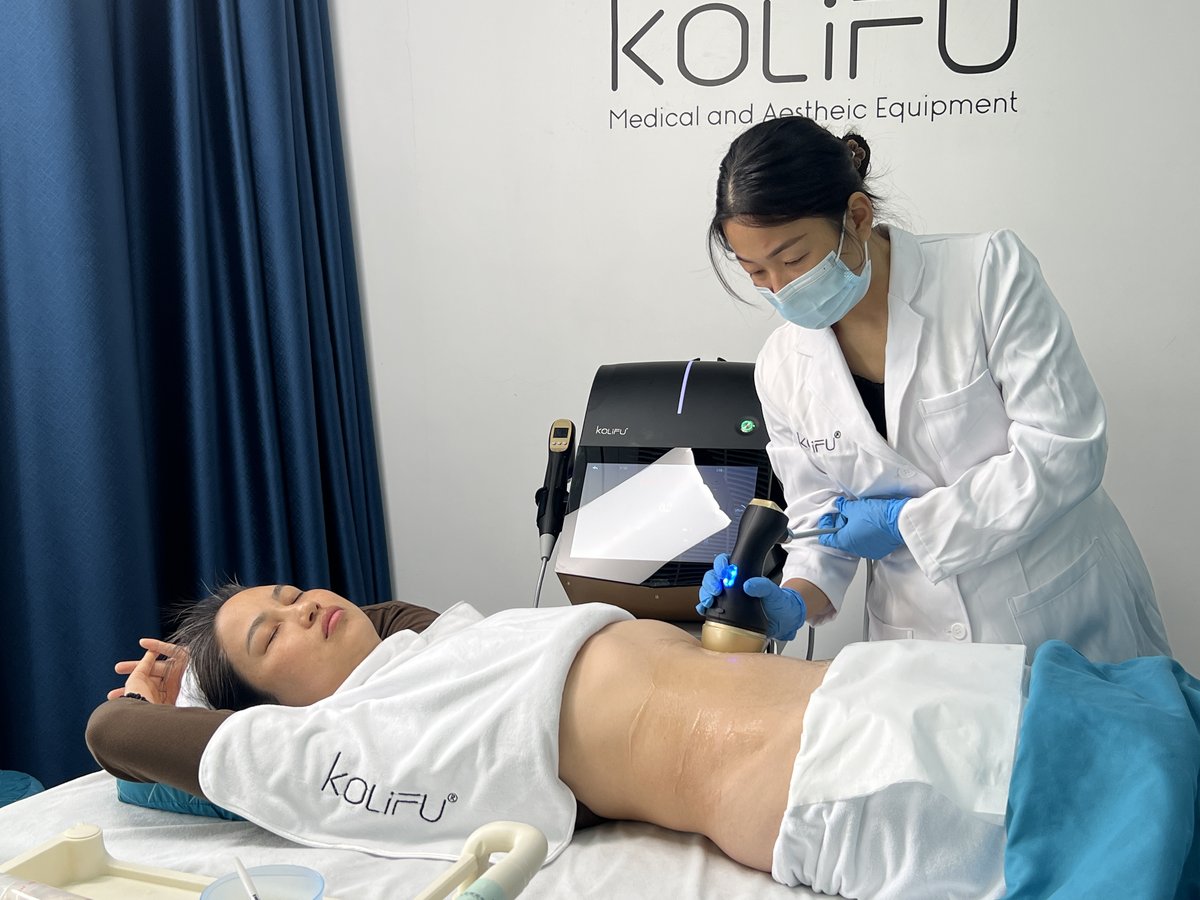
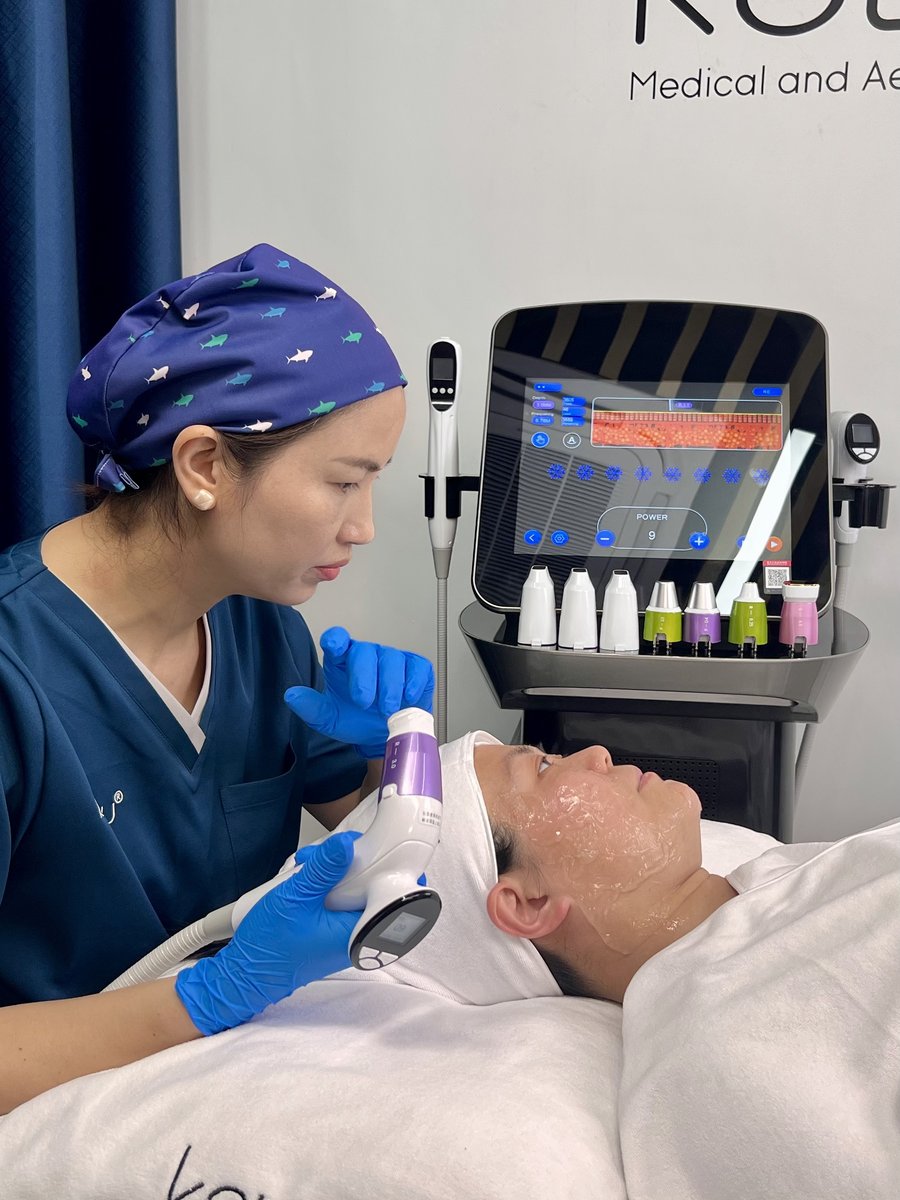
Buyers who are deciding between three or four beauty equipment factories in the same region almost always end up visiting one of them. If you are travelling to Guangdong, tell us your dates and we will arrange the visit around them — production floor, QC lab, showroom and a treatment demonstration, in one trip.
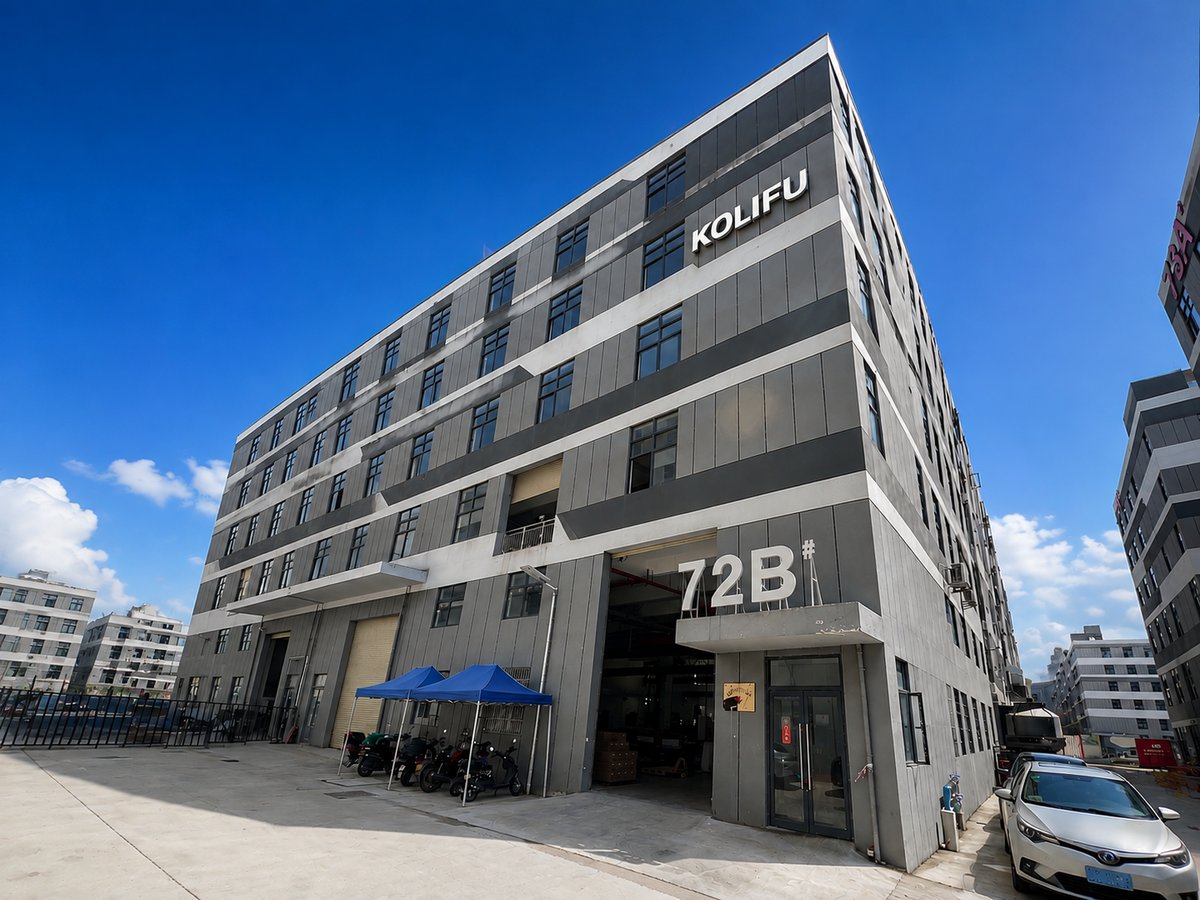
Qingyuan is around an hour from Guangzhou. Send us your arrival details and we will advise on the simplest route and arrange pickup at this end.
Your audit checklist, if you have one. We are happy to work through it section by section, including documentation your regulatory team needs.
We run live video tours of the production floor and showroom. You see the same benches, in real time, with your questions answered on camera.
Or email info@kolifu.com · Phone +86 18620688622
Whether you need a quote, documentation for your purchasing team, or dates for a factory visit — you will be talking to the people who build the equipment.