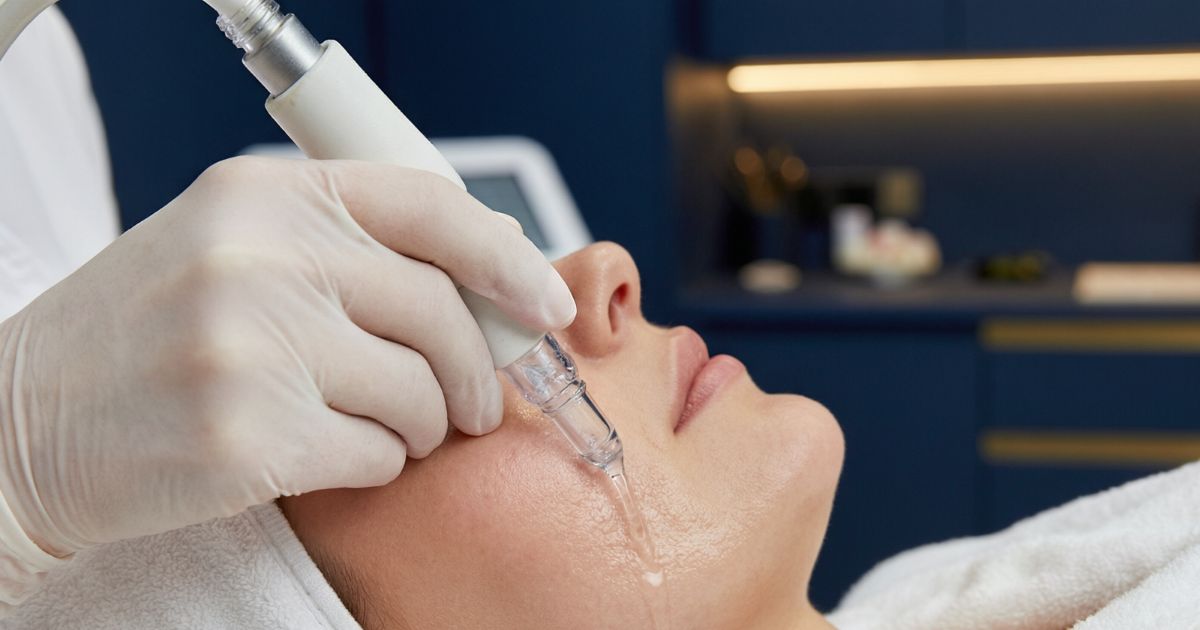
Short answer: HydraFacial is a brand name; hydro dermabrasion is the technology that brand is built on. When a clinic asks us which one to buy, they are usually asking a different question in disguise — do I need the branded system, or does a professional hydro dermabrasion platform deliver the same treatment? This page explains what the machines physically do, what the brand premium actually covers, and the specific things to verify on any system before you sign.
A Trademark and a Technology Are Not Two Categories
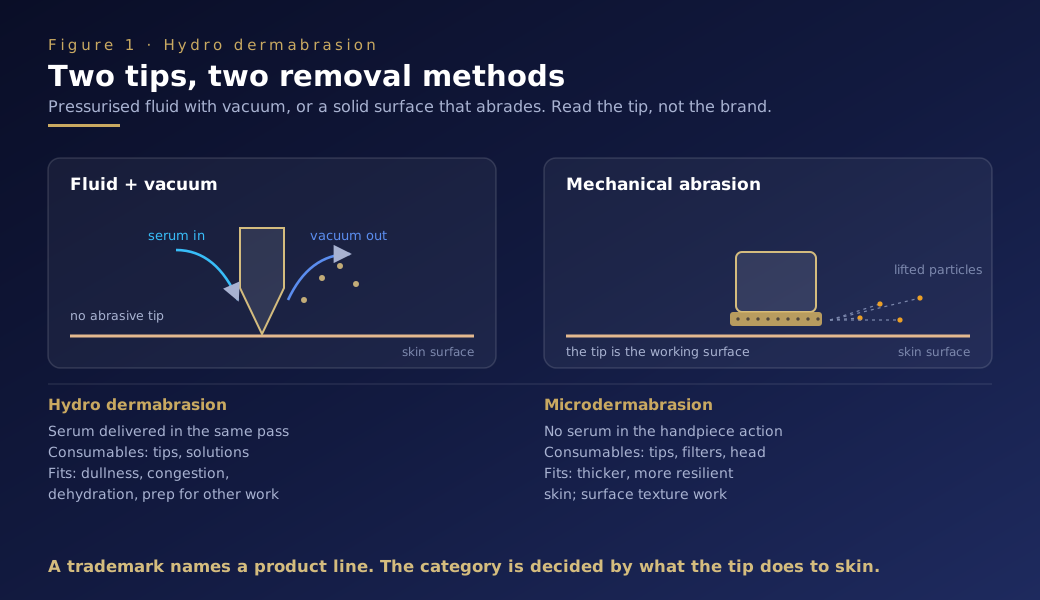
Hydro dermabrasion describes a family of treatments: a vacuum-driven handpiece delivers a pressurised fluid stream onto the skin while simultaneously aspirating it, lifting away loosened surface debris and delivering soluble actives into freshly prepared skin in the same pass. The branded system most people mean when they say the name is one manufacturer's implementation of that mechanism, with its own tip geometry, its own solution line, and its own training programme.
So the comparison is not "technology A versus technology B". It is one company's implementation versus everybody else's. That distinction matters for three practical reasons: what you can legally write on your treatment menu, what you pay per treatment, and who you call when the machine needs service in month fourteen.
How the Treatment Actually Works
A hydro dermabrasion handpiece performs four jobs in one pass, and understanding them makes the buying decision much simpler:
- Prepare. Warmth and fluid soften the surface and loosen sebum holding debris in the follicle.
- Exfoliate. The fluid stream lifts corneocytes without abrasion from a solid tip.
- Extract. Vacuum draws the spent fluid, debris and follicular content out of the treatment channel.
- Infuse. A fresh serum is delivered into skin that has just been cleared, which is the step that separates this from plain exfoliation.
Contrast that with microdermabrasion, which abrades mechanically with a diamond handpiece or crystal media. Both are surface treatments. They differ in how the surface is removed and in what happens immediately afterwards — hydro dermabrasion pairs removal with delivery, and does it without a solid abrasive contacting the skin.
| Hydro dermabrasion | Microdermabrasion | |
|---|---|---|
| Removal method | Pressurised fluid + vacuum | Mechanical abrasion (diamond or crystal) |
| Serum delivery | Yes, in the same pass | Not part of the handpiece action |
| Solid contact with skin | No abrasive tip | Yes, tip is the working surface |
| Typical fit | Dullness, congestion, dehydration, prep for other services | Thicker, more resilient skin; texture and superficial scarring |
| Main consumables | Tips and solutions | Tips, filters, diamond head replacement |
What the Brand Premium Buys You
Branded systems cost more, and the difference is not a secret — it is a specific set of things, some of which matter to your business and some of which do not:
- An engineered tip and solution ecosystem. The handpiece geometry, the tip range and the paired solutions are developed together, so the protocol is validated as a system rather than assembled from parts.
- Training and protocol structure. Structured onboarding, treatment protocols and a support line. For a clinic with no experienced laser or facial therapist on staff, this has real value.
- Marketing recognition. Clients search for the brand name. That demand exists and it is a genuine commercial reason to consider the branded route.
- The right to use the name. This is the one you cannot replicate. A generic machine gives you the treatment, not the trademark.
What you are not buying is a different physical mechanism. If a branded system's core action is vacuum-assisted fluid exfoliation and infusion, any competent professional platform in the category performs the same core action.
The Naming Problem on Your Menu
This catches out a lot of new clinics. If you operate a generic platform, you cannot advertise treatments under the brand name — that is a trademark problem for your business, not a grey area. What you can do is describe the treatment accurately: hydro dermabrasion, hydradermabrasion, serum infusion facial, or a proprietary name you give the service yourself.
Practically, clinics handle this by naming the outcome rather than the equipment. "Deep cleanse and hydrate", "glow facial", "pore refinement" — these are honest descriptions of what the client experiences, and they avoid borrowing somebody else's registration. We cover this and the wider buying criteria in our hydro dermabrasion machine guide.
What to Verify on Any Machine You Are Considering
Ask every supplier these questions in writing. The answers tell you more than a brochure:
- Is the fluid path closed or open? A closed single-client path means the aspirated fluid never meets the incoming serum. An open or shared-reservoir design is cheaper to build and harder to keep genuinely hygienic.
- How is vacuum regulated, and does it stay stable as the reservoir empties? Dropping suction mid-treatment is the most common complaint on low-end units, and it is a design issue rather than a fault.
- Which tips are included, and are they single-client or cleanable? This is where your per-treatment cost is decided. Get the included tip count and the replacement price.
- Are solutions locked? Some platforms require branded solutions. Find out before you assume you can source serums locally.
- What else is on the platform? Many current machines combine hydro dermabrasion with thermal, infusion or cooling stages, so one footprint covers a full facial protocol instead of three devices.
- Electrical and documentation. Mains voltage and frequency for your country, plug type, and the manufacturer's declaration of conformity. Importers routinely get this wrong — see our guide to importing aesthetic equipment.
Working Out Your Real Cost Per Treatment
Ignore the headline machine price for a moment and calculate the treatment instead. Take the tip cost per client, the solution volume consumed per face at its actual price, and any filter or line replacement interval, then divide by the number of treatments you can realistically schedule between services. That number, not the invoice, is what decides whether the service is worth menu space — and where it belongs in the menu is a separate question from whether it works.
The same discipline applies to every consumable-driven device on your floor, which is why we wrote a separate piece on consumable lock-in and chip-coded cartridges. It is the least glamorous line in an equipment budget and the one that most often turns a good purchase into a bad one.
Where Our Platforms Sit
We build multi-stage facial systems rather than single-function units. The KOLI-FACIAL Hydro Dermabrasion Platform runs the cleanse, extract and infuse sequence in one handpiece workflow and adds a thermal stage at 42-45°C to liquefy sebum before extraction, plus a needle-free high-pressure infusion stage and a cooling RF finish — the point being that one footprint covers a complete protocol instead of four separate devices on four trolleys. Our ULTRA FACIAL PRO is the comprehensive facial treatment system in the same range.
Both are factory-direct from our Qingyuan plant, both carry a 36-month parts and labour warranty, and both run on 110V or 220V at 50/60Hz for export markets. If you are building a facial line alongside needling or infusion services, the microneedling range shares the same serum-infusion logic at a deeper level of the skin.
Which Route Fits Your Business?
- Choose a branded system if your local market actively searches for that name, you want the training structure, and the per-treatment consumable cost still clears your target margin at realistic volume.
- Choose a professional generic platform if you are building your own service identity, want control over your solution supply, and would rather spend the difference on the machines that carry your high-ticket treatments.
- Choose a combined platform if you have one treatment room and need a complete facial protocol without dedicating floor space to four single-function devices.
You can compare the full range in our catalogue, or send us your market and menu and we will tell you honestly whether a facial platform is the right first purchase for you.
Buyer's Checklist
- Terminology: confirm you can describe the treatment without using a trademark you do not own.
- Fluid path: closed, single-client, with a documented wash-out procedure.
- Vacuum: regulated, and stable through a full treatment.
- Consumables: tip count, tip price, solution lock-in, all in writing before you compare quotes.
- Scope: decide whether you need a single-function unit or a multi-stage platform.
- Documentation: declaration of conformity, voltage and plug for your market, warranty terms and a named support contact.
Frequently Asked Questions
Is HydraFacial a different technology from hydro dermabrasion?
No. HydraFacial is a branded system that performs hydro dermabrasion, which is fluid-based exfoliation and serum infusion using a vacuum-driven handpiece. The underlying mechanism is the same category of treatment; the difference is the manufacturer, the proprietary tip and serum range, and the training and marketing support that come with the brand.
Can I advertise HydraFacial treatments using a generic hydro dermabrasion machine?
No. HydraFacial is a registered trademark and using it to describe treatments delivered on another manufacturer's equipment creates a trademark problem for your business. What you can do is describe the technology honestly, which is what clinics running generic systems typically do on their menus.
Is hydro dermabrasion better than microdermabrasion?
They work differently. Microdermabrasion abrades the surface mechanically, with a diamond tip or crystal media. Hydro dermabrasion uses a pressurised fluid stream plus vacuum, so exfoliation and extraction happen in the same pass and serum is delivered into freshly prepared skin. Hydro is generally gentler and suits more skin types, while mechanical methods remain effective for thicker, more resilient skin.
What consumables does a hydro dermabrasion machine need?
Disposable or cleanable tips, and serums or solutions per treatment. Ask your supplier for the tip range included, whether tips are single-client or replaceable, the recommended solution line and whether third-party solutions are compatible, and the price per treatment at your expected volume. Machines that lock you into a branded solution chain behave very differently on cost per treatment from machines that do not.