
Short answer: most import problems are paperwork problems, not machine problems. The device usually works fine. What stops a shipment, or strands a machine in a warehouse for six weeks, is a certificate that does not match the model number on the crate, a declaration of conformity nobody signed, a plug that is wrong for the country, or an invoice that describes the goods in a way the customs broker cannot classify. Every one of those is preventable before the machine leaves the factory. This is the document set to ask for, in the order you need it.
Separate Two Questions People Constantly Merge
The first question is engineering: does the machine meet the electrical and electromagnetic requirements that apply to equipment like it. The second is market access: does your country require a specific authority to register, licence or clear the device before you may sell treatments with it. A CE mark answers the first. It does not automatically answer the second, and in many countries the second question has no answer at all until you ask your own regulator.
Practical consequence: do not accept "it is CE marked" as the end of the conversation, and equally do not assume a machine cannot be imported until somebody tells you which register applies to you. Those are two different tasks with two different owners — the supplier handles the first, you handle the second.
The Documentation Pack to Request Before Payment
Ask for it as a set, in draft, while you still have the order on the table. Any reputable exporter sends these; a supplier who cannot produce them is telling you something useful.
- EU Declaration of Conformity — signed, naming the manufacturer, the exact model, and the directives applied. For our class of equipment that means the Low Voltage Directive 2014/35/EU and the Electromagnetic Compatibility Directive 2014/30/EU. An unsigned copy, or one that lists a model you did not buy, is the single most common cause of a stalled shipment.
- Test reports behind the declaration, with the standard numbers and revision dates printed on them. Reports older than the current revision of a standard raise questions at the border and from your own technical reviewer.
- Technical file summary — rated voltage and frequency, power draw, fuse and protection details, safety warnings. This is what an electrician or medical-device reviewer at your end will actually read.
- Serial-number-to-order mapping, ideally before crating. If the serial on the nameplate cannot be tied to the paperwork, the paperwork does not describe your machine.
- User manual in the language of the market where it will be operated, plus the machine's own label in that language where local rules require it.
- Packing list and commercial invoice whose descriptions, model codes and value match each other and the crate labels exactly.
- HS code proposed by the exporter and confirmed by your broker. Letting the two disagree is how a shipment ends up in a inspection queue.
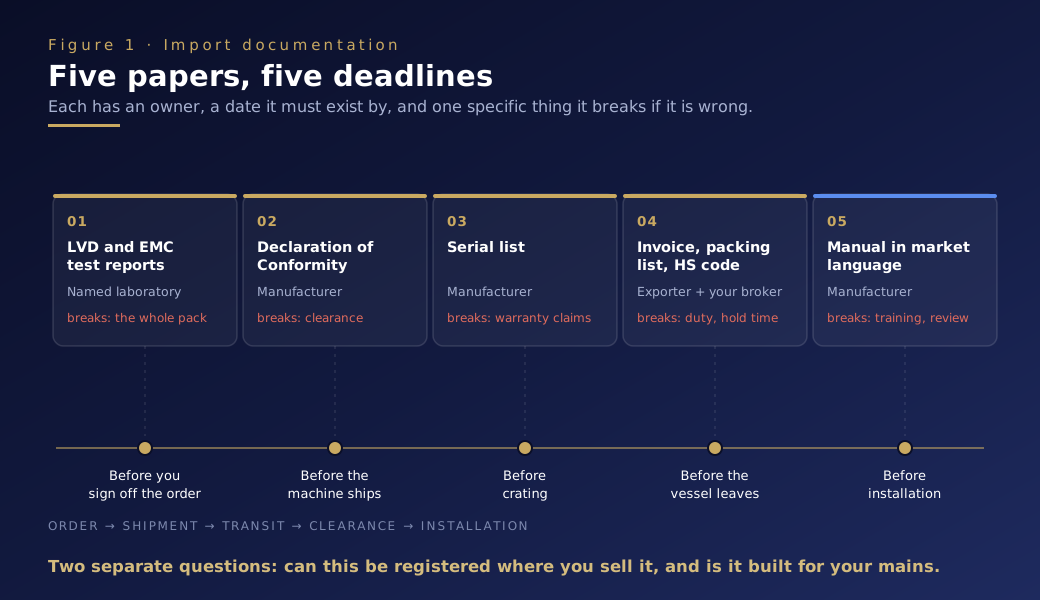
| Document | Who must produce it | When you need it | What it breaks if wrong |
|---|---|---|---|
| Declaration of Conformity | Manufacturer or its authorised representative | Before the machine ships | Customs clearance, local registration |
| LVD / EMC test reports | Testing laboratory named in the declaration | Before you sign off the order | Credibility of the whole pack |
| Serial list | Manufacturer | Before crating | Warranty claims, traceability |
| Manual in market language | Manufacturer | Before installation | Staff training, regulator review |
| Invoice / packing list / HS code | Exporter, confirmed by your broker | Before the vessel departs | Duty assessment, hold time |
Electrical Compatibility Is a Real Compliance Item, Not a Detail
A machine rated for one supply and plugged into another does not merely fail to work as intended; it defeats the assumptions inside its own safety certification. Confirm three numbers against your mains, not against a photo of the nameplate: voltage, frequency, and connected load.
Our platforms are specified for 110V and 220V at 50/60Hz, which covers most of the markets we ship into, and the configuration you order is fixed at production rather than adapted on site. Confirm the same two numbers with every supplier you quote, and put the one you need in the contract. If your grid is 60Hz and the machine ships in a 50Hz configuration, you find that out at installation — a bad day to learn it.
Who Clears Customs, and Why It Changes Your Risk
Two arrangements dominate, and they move responsibility rather than cost.
- DDP — delivered duty paid. The exporter carries the shipment to your door including clearance and duties. You receive a machine. The trade-off is less visibility into what was declared and how, and you are relying on the exporter's broker in a country they may visit rarely.
- FOB or CIF. You become the importer of record. Your broker, your duty bill, your inspection risk — and your control. This is the better arrangement when your country has a device register, because the entity that clears the goods is the entity the regulator will talk to.
If you are importing equipment that will touch clients, and your country runs any kind of device registry, talk to your own broker and your own regulator before choosing. Getting this decision wrong is expensive to undo; nobody is fined for asking early.
The Four Checks That Catch Most Failures Early
- Nameplate against declaration. Model designation, manufacturer name and address must read identically on both. A trading company's name on one and a factory's on the other is a question you will be asked.
- Declaration against directives. The directives and standards cited must be the ones that apply to this equipment, with revision dates that are current.
- Invoice against crate. Description, model, quantity, serial range, declared value.
- Documents against your own regulator's list. Whatever register applies to you will publish what it wants to see. Match the list item by item rather than assuming the exporter knows it.
What We Ship, Stated Plainly
So you can compare against any other quote. KOLIFU equipment is CE marked under the Low Voltage Directive and the EMC Directive, with the declaration and supporting reports issued before shipment and the serial numbers registered against your order at the factory. Voltage and frequency are configured to your market at production. Machines run a 72-hour ageing test before they are packed, and the 36-month parts and labour warranty is written against that serial. Freight can be arranged door-to-door on DDP terms where the destination supports it, or you can clear as importer of record with your own broker.
What we do not do is tell you whether your country requires a licence for the treatments you intend to offer. We are not in a position to know, and a supplier who is confident about your regulations from eight thousand kilometres away is guessing. Ask them for the documents; ask your regulator for the permission. Our certificate set is published so you can check it against the list above before you commit.
Decision Checklist Before You Transfer Money
- Draft Declaration of Conformity in hand, model name matching the order exactly.
- Test reports with named laboratory, standard numbers and revision dates.
- Voltage, frequency and load confirmed against your mains and written into the contract.
- Manual language confirmed for the market where staff will operate it.
- HS code agreed between exporter and your broker.
- Incoterms chosen with the clearance responsibility understood, not just the price.
- Your regulator's own document list read, item by item, by you.
Two related reading: how to verify a machine is what it claims to be covers the serial-number and authorisation-chain side of the same problem, and the total-cost-of-ownership model is where duty, freight and first-year servicing belong in your numbers rather than in a surprise email. If you are comparing configurations for a specific market, start with the machine catalogue and send us your document list — we will tell you which items we can supply and which you must handle locally.
Frequently Asked Questions
Is a CE mark enough to import an aesthetic machine?
It answers one of two separate questions. CE marking under the Low Voltage Directive and the EMC Directive addresses electrical and electromagnetic conformity; whether your country requires a separate registration, licence or clearance before you may offer treatments with the device is a different matter, decided by your own regulator. Do not accept a CE mark as the end of the conversation, and do not assume a supplier eight thousand kilometres away knows your national requirements.
What documents do I need before paying for imported equipment?
Request the pack as a set, in draft, while the order is still negotiable: a signed EU Declaration of Conformity naming the manufacturer and the exact model, the LVD and EMC test reports behind it with standard numbers and revision dates, a technical file summary covering rated voltage, frequency and protection, a serial-number-to-order mapping prepared before crating, the user manual in the language of the market where it will be operated, and a packing list, commercial invoice and proposed HS code that all describe the goods identically.
Should I import on DDP or FOB terms?
The choice moves responsibility rather than cost. DDP means the exporter carries the shipment to your door including clearance and duties, which fixes landed cost but leaves you relying on their broker and with less visibility into what was declared. FOB or CIF makes you the importer of record — your broker, your duty bill and your inspection risk, but also your control. If your country runs any kind of device register, the entity that clears the goods is the entity the regulator will deal with, which usually favours importing it yourself.
What most often goes wrong when importing a beauty machine?
Mismatches rather than failures. A declaration naming a different model designation than the order; a trading company on one document and a factory on another; a shipment cleared against an HS code the exporter chose that your broker will not accept; or a machine configured for the wrong mains voltage and frequency, which defeats the assumptions inside its own safety certification. Run four nameplate-to-paperwork comparisons before money moves, and read your own regulator's document list item by item rather than assuming the exporter knows it.