
Short answer: a machine that is genuinely new, a machine that is second-hand wearing a new shell, and a machine that never came from the factory it claims are three different purchases — and on paper they can look identical. Buying aesthetic equipment across a border adds distance and a layer of intermediaries to every verification step, which is exactly where these problems live. This is the routine we recommend running before payment clears, and the paperwork any manufacturer should supply without you having to ask twice.
Three Distinct Failure Modes
People lump these together as "fake machines". They are not the same problem and they do not fail the same way.
Re-cased second-hand units
A used machine cleaned up, re-shelled, re-labelled and sold as new. The cosmetic work is the easy part; the hidden part is that the life-limited components have already been consumed. Transducers, laser bars, flashlamps, high-voltage capacitors and chilled-water systems all age with use, not with calendar time. A unit whose meter has been reset will still have the worn optics of the machine it used to be.
The practical consequence is unstable output. Energy that drifts between pulses is not just a treatment-quality problem — inconsistent fluence is how a competent operator ends up with a burn on their hands.
Diverted stock: genuine machines, wrong channel
These are real units made by a real manufacturer, moved outside that manufacturer's authorised distribution. The machine is not counterfeit; the relationship is the problem. Warranty is usually void or unenforceable because the serial was allocated to a different distributor. Firmware may be from another region or an older revision. Spare parts and technical support may be refused, because the servicing manufacturer has no commercial reason to support a unit they never sold.
This is the category buyers most often talk themselves into: "it's the same machine, I saved money". It is the same machine with a different cost of ownership, and you discover the difference the first time it needs something.
Assembled counterfeits
The worst case, and the least common: a cabinet built to resemble a known model, filled with whatever power supply, applicator and control board fitted. These can be visually convincing in a photograph, which is why a video call is not enough on its own. The safety gap is the point — without proper isolation, earth bonding, interlocks and controlled thermal cut-off, the machine is an electrical hazard dressed as an asset.
The Verification Routine
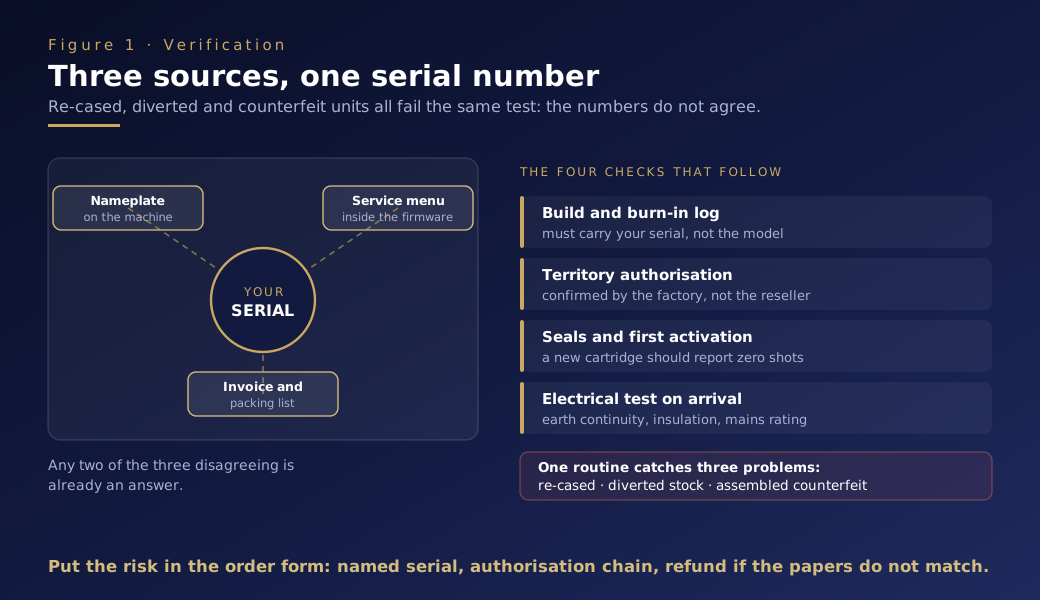
Run this on any machine above a trivial value, from any supplier, including us. Four checks, in order.
1. Serial number, cross-referenced three ways
The chassis nameplate, the software service menu and the commercial documents must all carry the same serial. Mismatch — or a nameplate that has been painted over, re-riveted or covered with tape — is a stop, not a question to ask later. Ask the manufacturer directly to confirm the serial against their build records; a real factory can tell you what shipped, to which distributor, and when.
2. Build and test evidence for your specific unit
Not a generic certificate for the model line — evidence about your machine. A pre-shipment test record, commissioned output measurement, and a burn-in log with your serial on it. If a supplier cannot produce these because the process does not exist, that tells you what the process is.
3. Authorisation chain
If you are not buying direct from the factory, ask who sold to whom. A legitimate distributor can show a current authorisation from the manufacturer for your territory, and the manufacturer can confirm it. Both halves of that check take about ten minutes by email and are the single most effective deterrent against diverted stock.
4. Consumable seals and first activation
Cartridges and applicators are where re-casing concentrates, because they carry the metered life. Check tamper seals before fitting anything. Fit a new cartridge and confirm the machine reports it as new rather than previously activated. If a "sealed" cartridge arrives already registered against a serial, or a meter reads non-zero on an unopened pack, stop the installation.
| Check | What you ask for | What a problem looks like |
|---|---|---|
| Serial | Nameplate, service menu, invoice and packing list | Any mismatch; painted, re-drilled or taped plate |
| Build record | Test and burn-in log carrying your serial | Only model-level documents; "we will send it later" |
| Authorisation | Current territory authorisation, confirmed by the factory | Cannot name the upstream seller; refuses contact |
| Consumables | Intact seals; cartridge reports first activation on fit | Broken seal; non-zero meter on new pack |
| Electrical | Earth continuity and insulation test on arrival | No local test done; wrong mains rating on the plate |
Put the Risk Where It Belongs: In the Contract
Verification catches most problems; the contract is what makes the remaining ones somebody else's cost. Two clauses do the work:
- A warranty of provenance. The seller warrants the unit is new, unmodified, manufactured by the named factory, and supplied through an authorised channel — and accepts the cost of rectification, including any regulatory consequence, if that turns out to be untrue.
- A right of acceptance. Payment or final payment releases after you have completed the checks above, not after the machine lands. A supplier confident in their own machine will accept this; a supplier with something to hide will fight it.
If a seller objects to either clause, that is the answer you were looking for. Read this alongside our guide to importing aesthetic equipment, because several of the documents in the checklist above are also the documents customs and your local regulator will want.
How a Direct Factory Relationship Removes the Whole Category
Most of this risk exists because of the gap between the buyer and the place the machine was built. Buying factory-direct closes that gap, and it is worth being specific about what that actually gets you rather than leaving it as a slogan:
- Your serial is traceable to us. Every KOLIFU unit is built at our Qingyuan facility and we can confirm a serial against our own records — that is the check described above, and it is the one a trading company cannot offer.
- Tested before it ships. Units run a 72-hour burn-in, and we will film the testing of your specific machine so you see it running under load before it leaves the building. Book it through our training and verification team.
- Documentation is prepared for the import, not just the sale. Declaration of conformity and specification sheets arrive with the machine. See what we hold.
- Warranty runs from us to you. 36 months covering parts and labour, with a named contact rather than a ticket queue — the difference shows up in the terms.
We are not going to pretend that buying direct makes verification unnecessary. It makes verification answerable: every item on the checklist above has a real document behind it, and you can call somebody who produced the machine.
Buying Used? Change the Method Entirely
There is a legitimate second-hand market, and for a well-built platform it can be sensible. What does not work is applying new-machine due diligence to a used purchase. If you buy used: insist on the full service history and original purchase documents, budget for a complete replacement of every life-limited component on day one rather than when it fails, have an independent electrical safety test done before anyone is treated on it, and assume no manufacturer support unless you have it in writing. Then compare that total against a new unit's price — the gap is frequently smaller than the risk.
Quick Red-Flag List
- Price materially below the model's known new price, with no explanation.
- Seller will not let you verify the serial with the manufacturer.
- Nameplate or cabinet screws show work: paint overspray, stripped heads, mismatched rivets.
- Software version does not match what the documentation claims for that build year.
- Cartridges arrive with intact-looking seals but non-zero counts.
- Every one of the above, and pressure to pay before you finish checking.
If you want a second opinion on a quote you already hold, send it to us — we will tell you which line items are unusual, even if the answer is that we are not the right supplier for you.
Frequently Asked Questions
How can I tell if an aesthetic machine has been refurbished and sold as new?
Start with the nameplate and the meter. The chassis plate, the software service menu and the commercial documents must all carry the same serial number, and a plate that has been repainted, re-riveted or covered with tape is a reason to stop. Then look at the life-limited components rather than the shell: transducers, lamps, bars and capacitors age with use, so a reset meter still sits inside a worn machine. Non-zero cartridge counts in sealed packs and unstable energy output between pulses are the two most practical tells.
What is grey market or diverted aesthetic equipment?
Genuine machines made by a real manufacturer but sold outside that manufacturer's authorised distribution. The hardware is authentic; the commercial relationship is not. Warranty is usually unenforceable because the serial was allocated to a different distributor, firmware may be from another region or revision, and the servicing manufacturer has no reason to support a unit it never sold. It is the same machine with a different cost of ownership.
Is buying a used aesthetic machine always a bad idea?
No, but it needs a different method. For a well-built platform a used purchase can be sensible if you get the full service history and original purchase documents, budget for replacing every life-limited component on day one rather than when it fails, have an independent electrical safety test done before any client is treated, and assume no manufacturer support unless it is in writing. Then compare that total against a new unit — the gap is often smaller than the risk.
What paperwork should I require before paying for a machine?
Three things specific to your unit rather than the model line: a pre-shipment test record and burn-in log carrying your serial number, a declaration of conformity whose model designation matches the order exactly, and — if you are not buying direct — a current territory authorisation that the manufacturer will confirm by email. Put a warranty of provenance and a right of acceptance in the contract so the remaining risk sits with the seller.