
Short answer: the invoice is roughly one third of what an aesthetic machine costs, and the rest of the number is where good purchases turn into bad ones. Clinics compare quotes and then discover that the cheapest machine to buy became the most expensive to own. This is the accounting we recommend before you commit — five cost lines instead of one, and a way to stress-test them against a utilisation you can actually defend.
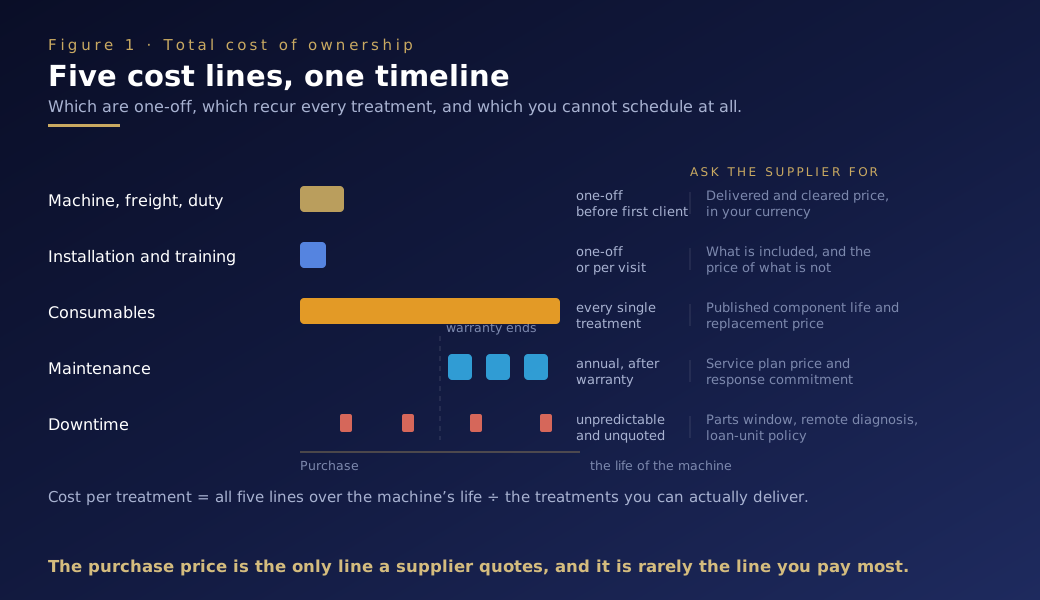
The Five Lines Nobody Puts in the Same Table
1. Acquisition
The machine, plus what people habitually leave out: freight and insurance, customs duty and import VAT, in-country delivery to your door, installation, and the electrical work if your room cannot carry the rated load. A quote that looks cheaper than the others and arrives ex-works is not cheaper — it has simply moved the cost onto lines you are now paying separately.
2. Getting your team competent
Training is a real cost whether you pay for it or pay for the mistakes. Budget therapist time at the machine before it earns, and ask what the supplier actually provides: protocol documentation, live instruction, a video library, refresher access, and whether that is included or sold separately.
3. Consumables per treatment
The recurring line, and the one that decides profitability at volume. Metered cartridges, disposable tips, filters, needles, gels and solutions all belong here. Get the published life of every metered component and its replacement price, then divide. Two machines with identical ticket prices can have wildly different cost per treatment, and the difference compounds every week for the life of the asset.
4. Maintenance, and the shape of the warranty
A warranty is not a cost — it is the absence of one, and only for as long as it lasts. Three questions expose what you actually hold: how many months, does it cover labour and not just parts, and what does it exclude. Warranties that cover the chassis but not the applicator move your largest future cost onto your own balance sheet. Consumable life is normally excluded from warranty and should be priced separately, not confused with coverage.
Then ask for the annual service price after expiry, in writing, before you buy. Suppliers who have never been asked this will not have it ready, and the silence is the answer.
5. Downtime
The invisible line. When a machine stops, three things happen at once: appointments are cancelled, refunds or rebookings cost you goodwill, and the asset earns nothing while the finance charge continues. What determines the size of this is not the failure rate but the recovery time — how fast a part arrives, whether diagnosis can happen remotely, and whether the whole unit has to ship back to the country of origin.
| Cost line | One-off or recurring | Ask the supplier for |
|---|---|---|
| Machine, freight, duty, clearance | One-off | Delivered-and-cleared price to your door, in your currency |
| Installation and training | One-off | What is included, and the price of what is not |
| Consumables | Every treatment | Published component life and replacement price |
| Maintenance after warranty | Annual | Service plan price and response commitment |
| Downtime | Unpredictable | Parts availability window; remote diagnosis; loan unit policy |
Turning It Into a Cost Per Treatment
This is the number worth arguing about, because it is the one that survives contact with reality. Take the total of the one-off lines and spread it across the number of treatments you expect to deliver over the period you plan to keep the machine. Add the recurring consumable and maintenance cost per treatment. The result is your floor price for the service — everything above it is gross margin on the treatment itself.
Cost per treatment = (amortised acquisition + consumables + maintenance) ÷ treatments delivered in the period
Now do the uncomfortable version. Re-run it at the utilisation you would defend in a bad month, not the one that makes the spreadsheet look good. A machine that only works at high volume is a machine with a hidden condition attached, and the market will eventually test it.
Residual Value Is a Cost Line Too
Equipment depreciates, and the rate is not uniform. A platform from a manufacturer with an active dealer network, documented service history and available parts holds value; a machine whose brand vanished in year two is close to scrap metal at the same age. If you plan to upgrade, the honest calculation is purchase price minus realistic resale, not purchase price alone.
Where a Direct Factory Relationship Changes the Arithmetic
Not by discounting — by removing lines and shortening others:
- Duty and clearance become predictable. We ship to destination markets with the paperwork prepared, offer DDP so the landed cost is fixed rather than estimated, and configure 110V/220V, 50/60Hz for the country of arrival. See what should accompany an imported machine.
- Consumables are published, not discovered. Every product page states cartridge life and handpiece configuration — for example the SYNCHROLIFT HIFU-RF ELITE and the LINKETS HIFU range — so the per-treatment calculation can be done before you enquire, not after.
- Warranty covers labour. Our 36-month term covers parts and labour, which is the exclusion that quietly converts a "covered" repair into an invoice. Terms are on the warranty page.
- Recovery is shorter. A named technical contact, remote diagnosis and direct parts from the plant that built the machine, rather than a request routed through two intermediaries.
We are a manufacturer, not a charity: none of this makes our machines the cheapest to buy, and we will not pretend otherwise. It makes the number smaller than the quote suggests, which is a different claim and the only one worth making.
The Four Questions That Expose a Bad Number
- "What does the cartridge cost, and how many treatments does it deliver?" If either half is unknown, the whole comparison is guesswork.
- "What happens in month forty?" Warranty expiry, service pricing and parts availability.
- "Is this price delivered and cleared, or ex-works?"
- "What is the machine unsuitable for?" A supplier who cannot answer has not thought about who buys it.
For the price-tier context these figures sit in, our HIFU machine price guide uses real published guide prices rather than a "from £" teaser. And if you would like the cost-per-treatment model built around a specific machine and your own volumes, send us the numbers — we will fill it in even when the answer is that the service does not work at your prices.
Frequently Asked Questions
Is the purchase price the main cost of an aesthetic machine?
Rarely, and treating it as the main figure is how clinics end up with the most expensive machine on the floor. Five lines decide the real number: acquisition including freight, duty, clearance, installation and any electrical work; training and therapist time before the machine earns; consumables per treatment; maintenance after the warranty expires; and downtime. Only the first of those appears in a quote.
How do I calculate cost per treatment?
Total the one-off lines, spread that across the number of treatments you expect to deliver over the period you plan to keep the machine, then add the recurring consumable and maintenance cost per treatment. The result is your floor price for the service. Re-run it at the utilisation you would defend in a bad month rather than the one that flatters the spreadsheet.
Does a longer warranty mean lower total cost?
Only if it covers labour and excludes little. A warranty is the temporary absence of a cost, and the exclusions matter more than the duration: coverage for the chassis but not the applicator moves your largest future expense onto your own balance sheet. Ask for the annual service price after expiry in writing before you buy, and note that consumable life is normally excluded and should be priced separately.
Does resale value matter when costing a machine?
Yes, if you plan to upgrade. Depreciation is not uniform: platforms from manufacturers with an active dealer network, documented service history and available parts hold value, while machines whose brand disappears in year two are close to scrap at the same age. The honest calculation is purchase price minus realistic resale, not purchase price alone.