Every aesthetic energy treatment works by handing skin a controlled injury, and skin answers on a schedule it will not renegotiate. This is the question clients actually ask, in some form, on almost every consultation: how long until I look normal again. It is also the question most clinics answer badly, because the honest answer depends on which kind of injury you delivered. Below is a general timeline that holds across the light and energy modalities — plus the four differences between technologies that change it. Use it as a consultation script, not as medical advice, and always defer to your local requirements.
The Underlying Pattern: Three Phases, One After the Other
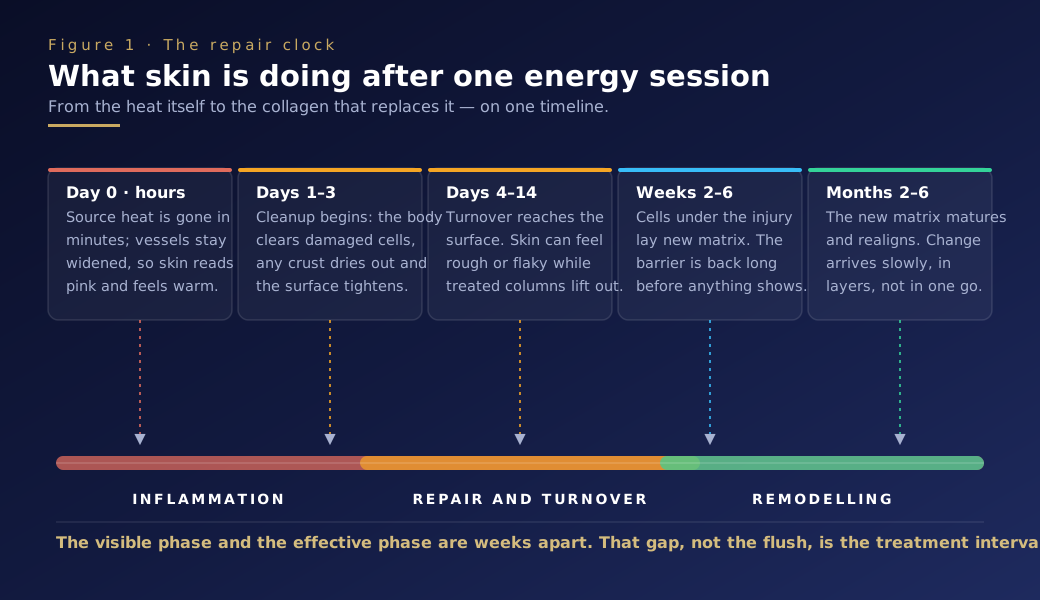
Thermal or mechanical micro-injury triggers the same repair sequence regardless of which machine caused it. The three phases run on a clock that is anatomical rather than technological:
- Inflammatory phase (roughly the first 24–72 hours). Blood flow increases, fluid accumulates, the surface is hot, tight and reactive. Nothing is being built yet — this phase is the site being prepared.
- Proliferative phase (days 3 through 7, sometimes longer). The skin replaces damaged surface material and rebuilds the matrix underneath. Cell turnover accelerates, which is why the surface looks flatter and brighter as it settles.
- Remodelling phase (weeks into months). New collagen is laid down, cross-linked and reorganised. This is where essentially all of the durable result comes from — and it is why the treatment and the outcome are separated by a long, unglamorous interval.
Understanding the sequence lets you answer the client's question accurately instead of optimistically. Redness on day two is not a complication; it is phase one running on schedule. Dryness on day five is not a reaction; it is turnover outrunning the moisture barrier.
Day by Day
| Day | What skin typically does | What the clinic should do |
|---|---|---|
| Day 1 | Warmth, tightness, pinkness across the treated field. Mild swelling is common around the jaw and eyes. | Cool, not cold. No hot water on the area. Physical sun avoidance from the first hour. No actives. |
| Days 2–3 | Peak visible reaction, then the turn. Skin may feel rough or sandpapery — the sign turnover has accelerated, not that the treatment failed. | Barrier repair: gentle cleanser, plain emollient, SPF. Stop the client picking. Expect the "it looks worse" phone call here. |
| Days 4–5 | Colour fades, any surface crust begins to lift on its own. Texture is the first thing people comment on. | Let crusts fall without assistance. Continue strict sun protection — newly made tissue pigment-reacts easily. |
| Days 6–7 | Most visible signs have resolved on superficial treatments. Deeper work may still show faint pinkness. | Normal routine can resume gradually. Photograph now, and again later, so the remodelling phase is provable. |
| Weeks 2–4 | Quiet. Surface looks ordinary; the matrix underneath is still being rebuilt. | Manage expectations deliberately. This is the gap where clients decide a treatment "did nothing". |
| Months 3+ | Result reads as a change in firmness, texture and light reflection rather than as a healed wound. | The fair comparison point. Book the review, and pitch maintenance while the result is visible. |
Four Things That Move the Timeline
1. Whether the surface was breached. Ablative fractional work removes columns of epidermis outright, so the client is healing a wound, not a reaction — plan on more days, more visible change and strict aftercare. Non-ablative work leaves the surface continuous, so there is rarely a scab; the recovery you see is inflammation and settle-down only. See how the two differ in picosecond versus Q-switched.
2. How much of the area was treated. Fractional patterns leave healthy tissue between injury columns precisely so healing can migrate inward from the edges. Density and pitch are therefore downtime settings as much as efficacy settings — a machine that fires a denser pattern is not simply "stronger", it is slower to recover from.
3. Depth of the target. Surface work shows early and settles fast. Work at the SMAS layer barely shows on the surface at all and takes months — which is why HIFU depths confuse clients more than any other modality.
4. Cooling during the procedure. The better the epidermis was protected while energy was being delivered, the less of day one you will have to explain afterwards. On a high-throughput machine this is a consumable and maintenance item, not a comfort feature.
Signals Worth Stopping For
Most day-two anxiety is normal. These are not, and any of them is a reason to stop treating and refer the client out rather than manage it in-house:
- Increasing pain after the first 48 hours instead of decreasing.
- Yellow discharge, spreading warmth, or fever — infection behaviour, not healing behaviour.
- Blistering, or a wound that weeps rather than dries.
- Darkening or lightening of the skin that persists past the expected settle window — a pigment response needs assessment, not a cream.
- Any eye-area involvement, cold sore reactivation, or a reaction that spreads well beyond the treated border.
Nothing in this list is exotic, and none of it is a machine fault. Document settings, energy and the client's condition before the treatment, and keep the record — that is the part of aftercare that protects the clinic.
Turning the Timeline into a Consultation Script
Clinics lose reviews at the expectation stage, not the results stage. Three sentences carry most of it: the surface settles in a week, the result builds for three months; the second and third day look worse than the first — that is the schedule, not a reaction; nothing peels before its own time. Say them before the first line is fired and your follow-up call volume drops noticeably.
Frequently Asked Questions
How many days of downtime should a client plan for?
It depends entirely on whether the surface was breached. Non-ablative work — most ultrasound, most RF, non-ablative fractional — typically settles within three to five visible days with no break in the skin. Ablative fractional work is a wound-healing process and needs meaningfully longer, with visible crusting. Quote a range based on which you are actually performing, never a single number for the category.
Is redness on day two a sign something went wrong?
Usually not. Days two and three are the peak of the inflammatory phase for most energy treatments, and roughness or sandpapery texture at that point reflects accelerated turnover rather than a complication. Escalate only if redness is spreading with pain, heat or discharge.
When is it fair to judge whether a treatment worked?
At three months. The appointment delivers controlled micro-injury; the outcome comes from the remodelling phase, which runs for weeks to months afterwards. Judging at two weeks systematically underrates every collagen-based treatment.
What aftercare advice is generally safe to give every client?
Cool rather than cold compresses early, no hot water on the area for the first day, gentle cleanser and a plain emollient, no actives or exfoliants until the surface has settled, strict physical sun avoidance throughout, and letting any crust fall on its own. Individual cases and local requirements differ — always defer to your own protocols.
What to Have Ready Before You Sell Energy Treatments
- A written aftercare sheet handed over at the appointment, not recited at the door.
- A photo protocol at consistent lighting: booking, day 7, month 3. Without it the remodelling phase is invisible to the client.
- Documented settings per client — energy, density, depth, passes — so a poor response can be traced to a variable you control.
- A referral route for the red-flag list above, decided in advance rather than improvised.
- Reliable cooling on the machine, treated as a safety component with a maintenance schedule, not a comfort add-on.
- An expectation script for the two-to-twelve-week gap, because that is where reviews are lost.